Your Compassionate Guide to Healing Delayed Complex Trauma in Adulthood

Do you ever feel like your past isn't just a memory, but a persistent, unsettling presence, a ghost that whispers in the quiet moments and rattles the foundations of your present? What if the struggles you face today, those intense emotional swings that feel like a sudden squall, the pervasive unease that settles deep in your bones, the baffling relationship patterns that seem to repeat on an endless loop, aren't new at all, but rather the powerful, undeniable echoes of a past you desperately hoped was buried? Many of us find ourselves grappling with these delayed complex trauma symptoms in adulthood, perhaps feeling, quite frankly, like "a mess in many ways" despite years of genuinely trying. Maybe you've navigated countless self-help books or sat through therapies that, instead of helping, left you feeling utterly "invalidated," culminating in a profound, soul-crushing sense of failure and isolation. It's a lonely place to be.
Let me assure you: you are absolutely not alone in this experience. This phenomenon, known as delayed complex trauma, affects more people than you might think. Research shows that nearly 25% of trauma-related symptoms don't appear until at least six months after the original experience, and sometimes they remain hidden for years. This isn't, and never was, a sign of weakness; quite the opposite, it's a profound testament to your incredible, often unseen, resilience, and your brilliant brain's powerful, if at times utterly bewildering, way of protecting you. The path to healing complex trauma, as many of us have learned, is rarely a straight line; it's often long, winding, non-linear, and intensely personal. This guide is designed to be a compassionate, actionable blueprint, moving beyond surface-level advice to offer practical, grounded strategies for daily resilience, for wisely navigating the often-confusing landscape of professional support, and ultimately, for truly cultivating post-traumatic growth.
Understanding Delayed Complex Trauma: More Than Just a Memory
Trauma, we're learning, isn't merely a collection of 'bad memories' tucked away in a dusty corner of the mind; it's a profound physiological and psychological wound, a deep imprint that can quite literally reshape the very architecture of our brains and the delicate wiring of our nervous systems. When this wound is inflicted through prolonged, repeated experiences, especially during those tender, formative years within the context of interpersonal relationships, it frequently leads to what we call Complex Post-Traumatic Stress Disorder (C-PTSD). Unlike single-incident PTSD, which often stems from a discrete, shocking event like a car accident or a natural disaster, C-PTSD emerges from chronic, inescapable stressors: the relentless weight of childhood abuse, the chilling silence of neglect, the constant threat of domestic violence, or the soul-crushing confinement of prolonged captivity.
What We're Really Talking About
"Delayed Complex Trauma Symptoms" isn't an official diagnosis you'll find in psychiatric manuals, but it's a very real phenomenon that mental health professionals recognize and treat. Think of it as describing a specific pattern: when the complex effects of early trauma don't fully surface until months, years, or even decades later.
To understand this better, it helps to know about two related but distinct conditions:
Delayed-Onset PTSD is officially recognized and occurs when the full symptoms of PTSD don't appear until at least six months after a traumatic event. Research shows this happens in about 25% of PTSD cases, and it's particularly common among military veterans and older adults who experienced childhood trauma.
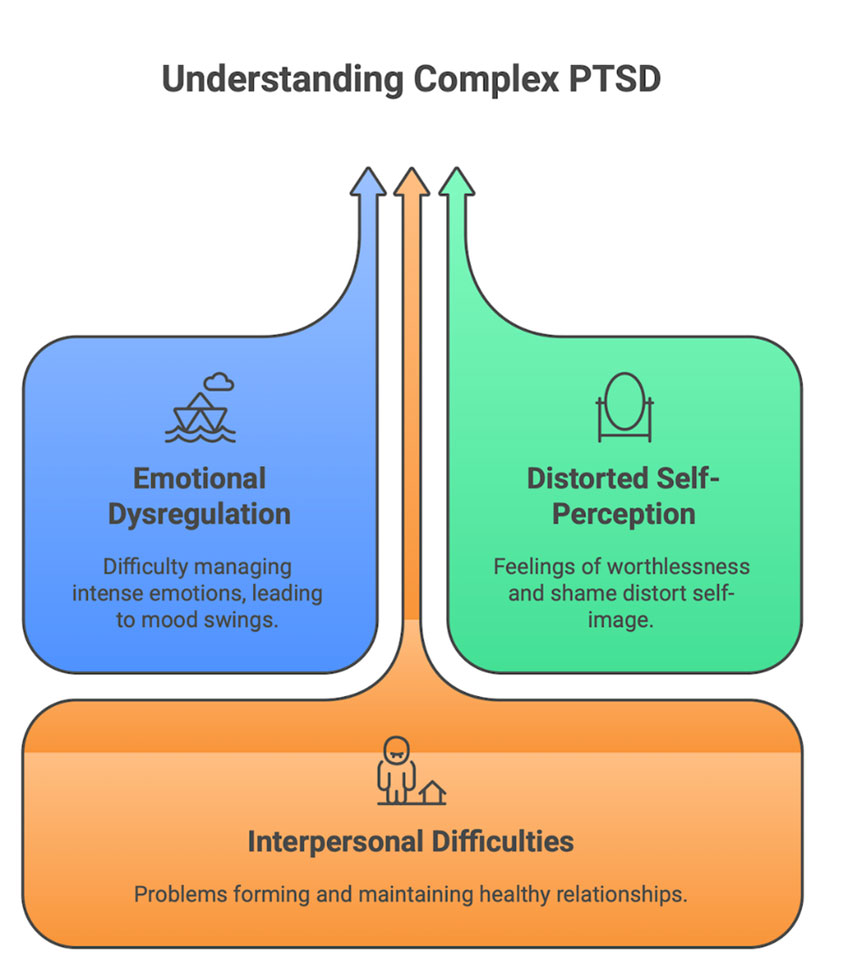
Complex PTSD (C-PTSD) is also officially recognized (by the World Health Organization's ICD-11) and encompasses traditional PTSD symptoms in addition to three additional symptom clusters that reflect disturbances in self-organization:
- Emotional dysregulation: Imagine trying to steer a boat in a hurricane — that's what it can feel like to manage intense emotions, leading to wild mood swings, chronic irritability, or the unsettling feeling of being utterly numb.
- Distorted self-perception: This is where deep, pervasive feelings of worthlessness, shame, guilt, or the haunting conviction of being fundamentally "defective" take root.
- Interpersonal difficulties: Profound problems forming and maintaining stable, healthy relationships, often heartbreakingly repeating the very unhealthy patterns we swore we'd escape.
These symptoms typically arise from prolonged, repeated trauma, particularly when it occurs during critical developmental periods and involves people who were supposed to care for you. The pervasive "inner critic" and a profound, bone-deep shame are truly defining hallmarks of C-PTSD, less central to the experience of single-incident PTSD.
When These Two Patterns Combine
Delayed complex trauma symptoms occur when someone who experienced early or ongoing trauma develops the full range of C-PTSD symptoms much later in life. It's like a slow-burning fuse. The trauma planted seeds that only bloom years later.
Why Do Trauma Symptoms Lie Dormant for So Long?
The delayed surfacing of trauma symptoms is a recognized phenomenon, sometimes categorized as "PTSD with delayed specification" in the DSM-5. For those of us navigating complex trauma, this delay isn't just common; it's practically a hallmark.
- Survival Mechanism: In childhood, your brain and body prioritize one thing above all else: survival. Repression and dissociation, while painful later, can be incredibly adaptive strategies to cope with overwhelming, inescapable threats. These coping mechanisms effectively "wall off" traumatic memories and emotions, allowing the child to function and simply survive.
- Lack of Safety: Healing demands a foundational sense of safety. If an individual remains trapped in an unsafe environment or tragically lacks a secure attachment figure, the nervous system remains locked in a state of hypervigilance, actively preventing the deeper processing of past trauma.
- New Stressors Act as Triggers: A seemingly minor adult stressor — a painful relationship breakup, a sudden job loss, or even positive life changes like parenthood — can suddenly overwhelm a nervous system that's already running on fumes. This new stress acts like a potent trigger, causing the carefully stored, walled-off trauma to erupt as delayed complex trauma symptoms in adulthood.
- Neurobiological Changes: Chronic trauma, particularly when it occurs during the critical developmental windows of childhood, can lead to lasting, tangible changes in brain structure and function, profoundly affecting areas responsible for emotion regulation, memory, and our primal fear response.
When the Past Catches Up: Common Triggers
Several life events can awaken these sleeping trauma responses:
Life Changes and Transitions
- Becoming a parent yourself
- Getting married or entering serious relationships
- Reaching the age when your trauma originally occurred
- Major career changes or retirement
New Stressors
- Job loss or financial pressure
- Death of a loved one
- Medical diagnoses
- Moving to a new city
- Experiencing new traumatic events, particularly those that echo earlier experiences
Reminders and Anniversaries
- Witnessing someone else's trauma
- Your own children reaching the age you were when trauma occurred
- News events that echo your past experiences
How Delayed Trauma Shows Up in Daily Life
Emotional and Mental Signs
Emotional Dysregulation: You might find yourself having intense reactions that seem out of proportion to current situations. Maybe you explode over minor inconveniences or feel completely numb when you think you should feel something. These are signs that your emotional regulation system learned to protect you in extreme ways.
Identity Confusion: Many people describe feeling like they don't really know who they are. You may struggle with a pervasive sense of being "fundamentally flawed" or "completely different from other human beings." This makes perfect sense when early experiences disrupted the normal process of developing a stable sense of self.
Shame and Distorted Self-Perception: Perhaps the most painful aspect is a deep, persistent feeling that something is wrong with you. This isn't about specific things you've done — it's a core feeling of being flawed or unworthy that seems to color everything despite external success and recognition.
Relationship Patterns
The Push-Pull Dynamic: You may experience intense fear of abandonment alongside difficulty with closeness and intimacy. This creates an exhausting pattern of getting close to someone, then pulling away when intimacy feels too threatening.
Repeating Unhealthy Patterns: Without understanding why, you might find yourself repeatedly drawn to unhealthy relationship dynamics, often unconsciously recreating familiar but harmful patterns from your past.
Physical Symptoms
Your body remembers what your mind might have forgotten. Studies reveal that 70% of individuals with C-PTSD experience high levels of somatic symptoms compared to 48% of those with standard PTSD. Common manifestations include chronic fatigue, headaches, gastrointestinal issues, muscle and joint pain, and various unexplained physical complaints.
Cognitive and Dissociative Symptoms
Memory and Attention Difficulties: You might struggle with focus, memory gaps, or feeling like your mind is foggy. These cognitive symptoms may be misattributed to ADHD or other conditions without recognizing their traumatic origins.
Feeling Disconnected: This is that eerie feeling of detachment — from your own body, your emotions, or even from reality itself. This dissociation was once a brilliant survival strategy that your mind continues to use when feeling threatened.
Intrusive Memories & Emotional Flashbacks: C-PTSD often introduces "emotional flashbacks" — intense, raw feelings from the past suddenly overwhelm the present, without a clear visual memory of the event itself.
Why Does This Happen: The Science Behind the Delay?
Your nervous system is remarkably intelligent. During childhood trauma, your brain's alarm systems became hyperactive to keep you safe. These same systems can remain on high alert years later, ready to sound the alarm when something reminds them of past danger — even when you're actually safe now. Sensitization, kindling, and generalization represent three interconnected neurobiological processes that explain how childhood trauma can create lasting changes in your nervous system, often manifesting symptoms years or even decades later.
Sensitization: Your Nervous System Becomes "Primed"
Sensitization occurs when your nervous system becomes increasingly reactive to stress after initial trauma exposure. Think of it as your brain's alarm system becoming hypersensitive — like a smoke detector that goes off when you burn toast instead of waiting for an actual fire.
During childhood trauma, your HPA (hypothalamic-pituitary-adrenocortical) axis becomes "primed" through chronic activation. This means that when you encounter new stressors, even minor ones, your system responds as if facing the original threat.
Kindling: When Your System Fires Spontaneously
Kindling represents the next stage, where your nervous system begins generating trauma responses even without clear external triggers. Your amygdala and fear circuits become so hyperactive that they can trigger fight-flight responses spontaneously. You might experience anxiety, panic, or emotional flashbacks seemingly "out of nowhere."
Generalization: Fear Networks Spread Too Widely
Generalization occurs when your fear response expands to include increasingly broad and unrelated situations. You might find yourself feeling unsafe in situations that bear only superficial resemblance to your original trauma.
The Delayed Expression Connection
These three processes explain why complex trauma symptoms often emerge years later. Your nervous system may have successfully managed for years through various coping mechanisms, but sensitization, kindling, and generalization create a biological vulnerability that can be triggered by:
- Life transitions (marriage, parenthood, career changes)
- Reminder stressors that resemble original trauma elements
- Physical illness or aging that reduces your system's resilience
- Loss of protective factors (supportive relationships, stable environment)
The Developmental Impact
When these processes occur during childhood development, they don't just create temporary states — they organize your developing brain into lasting traits. Your nervous system learned to be hypervigilant during childhood because it was genuinely adaptive for survival. However, these same protective mechanisms can become problematic in adult relationships and safe environments.
The High-Functioning Paradox: When Survival Becomes a Burden
Here's a particularly cruel twist: many individuals with C-PTSD develop highly effective coping mechanisms that allow them to appear "normal," even to excel in demanding careers or be the "strong one" for everyone else. This "flight mode" — the relentless drive to achieve and over-perform — isn't a sign of health; it's often a sophisticated, exhausting survival strategy masking deep, internal pain. The tragic irony is that this often leads to severe burnout and a profound collapse later in life, as the nervous system simply can no longer sustain the constant, Herculean effort.
Why Understanding This Matters
Recognizing delayed complex trauma symptoms is incredibly important because it explains the "Why Now?" question, helps you understand that this is not a life sentence, validates that your coping was actually working, and shows that it requires specialized care.
If you're struggling with symptoms that seem to come out of nowhere, understanding this pattern can provide crucial insight. You're not "losing it" — there's a logical explanation for what you're experiencing. These symptoms combine complexity with delayed timing, and they need trauma-informed treatment approaches that understand both aspects.
Step 1: Laying the Foundation — Cultivating Internal Safety & Daily Resilience
The very first, truly crucial step in healing delayed complex trauma symptoms in adulthood is to establish a deep, felt sense of safety, both within yourself and, wherever possible, in your external world.
Please, truly remember this: Your trauma response is not a flaw; it's a perfectly normal, albeit overwhelming, reaction to deeply abnormal circumstances. You are not broken; your brilliant brain is simply, tirelessly, trying to protect you.
Practical Tools for Daily Regulation:
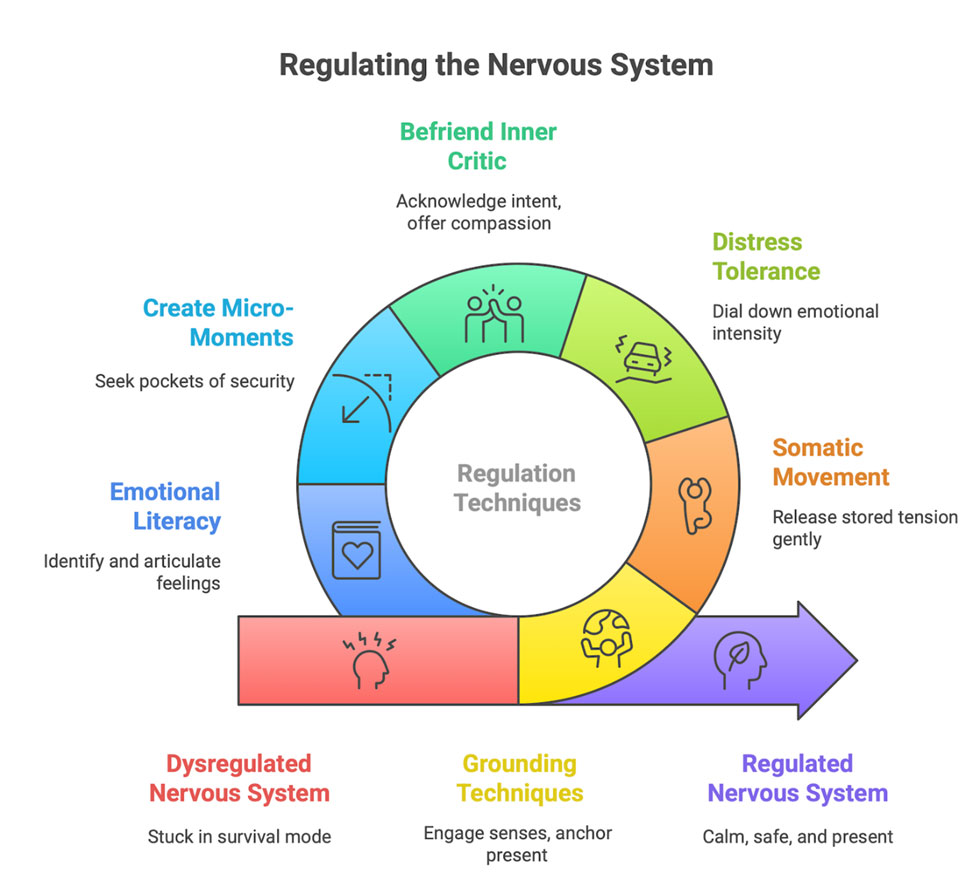
- Nervous System Regulation: Trauma keeps our nervous system perpetually stuck in one of its primal survival modes: fight, flight, freeze, or fawn. Learning to gently, consistently, bring it back to a state of relative calm is absolutely fundamental to healing.
- Grounding Techniques: When you feel overwhelmed, actively engage your senses. Try the classic '5-4-3-2-1' exercise: Name 5 things you can see, 4 things you can feel, 3 things you can hear, 2 things you can smell, and 1 thing you can taste. This simple act can anchor you firmly in the present.
- Somatic Movement: Gentle, intentional movements like shaking out your hands and feet, a slow mindful stretch, or a quiet walk in nature can help release stored tension. Explore polyvagal theory's emphasis on vagal nerve toning — simple acts like humming, singing, or practicing deep, slow, belly breaths can work wonders.
- Distress Tolerance Skills (DBT-informed): When emotions feel too big to bear, DBT offers powerful rapid-response tools. Remember TIPP (Temperature, Intense exercise, Paced breathing, Paired muscle relaxation) to quickly dial down emotional intensity.
- Creating Micro-Moments of Safety: Even if your external environment isn't fully safe, actively seek out small, precious pockets where you can feel relatively secure. These micro-moments are vital lessons for your nervous system, teaching it, bit by bit, what safety truly feels like.
Step 2: Navigating the Healing Landscape — Finding the Right Professional Support
While self-management tools are absolutely vital, processing deeper trauma often requires the compassionate, skilled guidance of a professional. Finding the 'right' trauma-informed therapist isn't just luck; it's a genuine skill.
A Comprehensive Guide to Trauma-Informed Therapies for C-PTSD:
It's absolutely crucial to understand that not all therapies are created equal, especially when it comes to the intricate layers of complex trauma. Look for therapists specializing in these modalities:
- Phase-Oriented Treatment: Many seasoned experts advocate for a thoughtful, phase-based approach for C-PTSD: (1) Safety and Stabilization, (2) Trauma Processing, (3) Integration and Reconnection.
- Eye Movement Desensitization and Reprocessing (EMDR): A highly effective, often transformative therapy for trauma that helps your brain reprocess distressing memories. Many report a significant reduction in anxiety and the intense "charge" of painful memories.
- Dialectical Behavior Therapy (DBT): A true powerhouse for tackling emotional dysregulation, building distress tolerance, and enhancing interpersonal effectiveness — core challenges in C-PTSD.
- Internal Family Systems (IFS): Often referred to as "parts work," IFS therapy for trauma is a deeply compassionate approach that helps you understand and heal the different internal "parts" of yourself — the harsh inner critic, the wounded child, the vigilant protector.
- Somatic Experiencing (SE) / Sensorimotor Psychotherapy: Body-oriented therapies that recognize trauma isn't just in your head; it's stored deep within your tissues and nervous system.

Finding the Right Specialist:
- Seek Trauma-Informed Care: Look for therapists who explicitly state expertise in C-PTSD, developmental trauma, or attachment theory.
- Interview Therapists: Don't hesitate to interview several therapists. Ask about their specific approach to C-PTSD, their training, and crucially, how they handle complex issues like dissociation or intense emotional dysregulation.
- Prioritize the Therapeutic Relationship: The connection with your therapist is paramount. You need to feel genuinely safe, truly seen, and deeply understood.
Step 3: Rewiring Relationships — Healing Attachment Wounds & Building Connection
Delayed complex trauma symptoms in adulthood don't just exist in a vacuum; they ripple outwards, profoundly impacting the very core of our relationships. Early relational trauma frequently shapes insecure attachment styles, making it incredibly difficult to truly trust, to set healthy boundaries, or to simply feel secure with others.
Healing Attachment Wounds:
- Understanding Attachment Theory: Learning about secure, anxious, avoidant, and disorganized attachment styles isn't about labeling yourself; it's about gaining profound insight into your own relational blueprint.
- Communicate Your Needs: Practice using clear, vulnerable "I" statements to express your feelings and needs without blame.
- Set Healthy Boundaries: Boundaries aren't about building walls; they're about creating safe fences. Clearly define what you are and are not comfortable with. Remember, 'no' is a complete sentence.
- Addressing Loneliness: Actively seek out trauma-informed support groups — online or in-person. These communities can provide an invaluable sense of belonging and validation from those who truly understand.
Step 4: Beyond Survival — Embracing Post-Traumatic Growth and Thriving
Healing, at its deepest level, isn't about erasing the past. Instead, it's about profoundly changing your relationship to your past, gently integrating it into a stronger, wiser, and more resilient version of yourself.
Cultivating Post-Traumatic Growth (PTG):
- Finding New Meaning: Many survivors discover a profound new meaning in life — a deeper appreciation for existence, stronger more authentic relationships, a renewed sense of purpose, or an incredible compassion for others who suffer.
- Integrating Trauma and Blessings: It's entirely possible to acknowledge the profound suffering of your past while simultaneously recognizing and cherishing the moments of joy, connection, and success in your present.
- Embracing a Non-Linear Journey: Recovery is not, and never will be, a straight line. There will be setbacks and times when you feel "a mess" all over again. These are not failures; they are simply part of the human journey.
The Hidden Strength in Delayed Symptoms
People who experience delayed complex trauma symptoms often developed sophisticated ways of coping that allowed them to function well for years. When symptoms finally emerge, it's not because you're weak or your coping "failed." It's often because you finally have enough safety and stability to process what happened, or your body and mind are signaling that it's time to heal more deeply.
The journey of healing delayed complex trauma symptoms in adulthood is, without a doubt, one of the most arduous yet profoundly rewarding paths one can embark upon. It is a living, breathing testament to your incredible resilience. By truly understanding the intricate tapestry of your trauma, by actively engaging in the gentle art of self-regulation, by wisely seeking out appropriate professional help, by bravely nurturing healthy, authentic relationships, and by courageously embracing the boundless potential for growth, you can and will move beyond merely surviving. You will learn to truly thrive.
Why CoachForMind?
Experienced Psychologists: We are a team of licensed RCI-registered clinical psychologists. Our team is well-experienced in various forms of therapy such as CBT, DBT, EMDR, and Narrative Therapy.
Personalized Approach: We are dedicated to treating our clients in the best-suited way, carefully curated as per the client's needs, and adhering to one-on-one, client-centered therapy.
Scientific Techniques: Our treatment plans and therapeutic methods are based on highly researched scientific findings such as CBT, DBT, EMDR and Narrative Therapy.
Quality service: We at CoachForMind ensure quality services in our treatment regime and therapeutic approaches, including comprehensive trauma treatment in India. Our clients hold the most value to us, so we ground our techniques in empathy while maintaining professionalism.
Begin with a free 15-minute discovery call. For more information, please visit our website or contact us directly at coachformind@gmail.com
Written by Ms Tamana - Psychotherapist at Coach For Mind