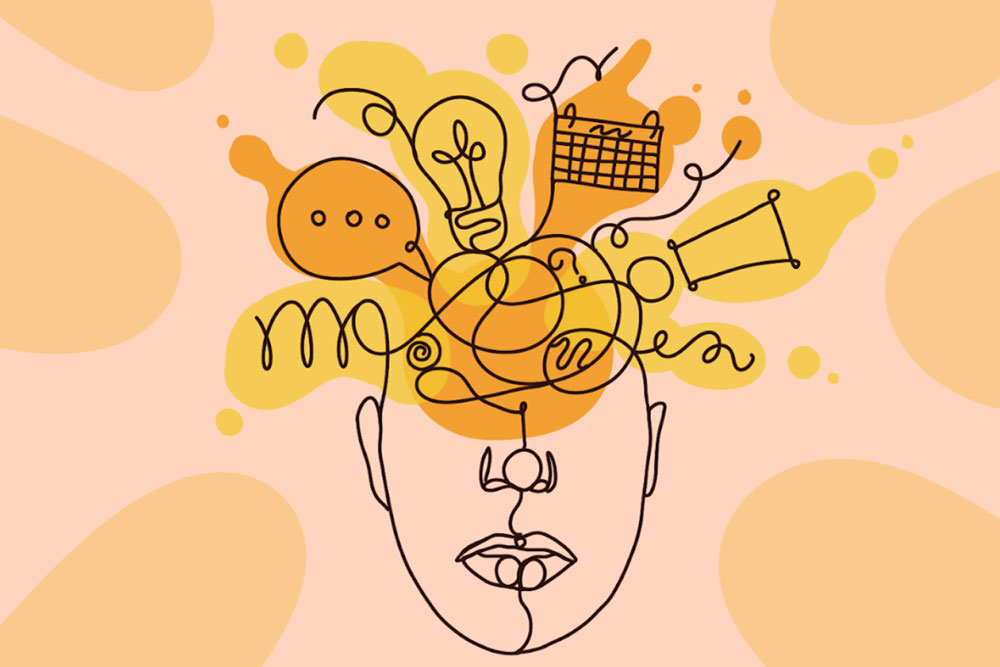
How Stigma Silences and Harms People with ADHD
If you’ve ever been told to “just try harder” or been labeled as “lazy” despite desperately wanting to get things done, you’re not alone. For countless people with ADHD, this label isn’t just inaccurate, it’s deeply damaging. It turns neurological differences into moral failings, silencing the real story of what’s happening in the brain.
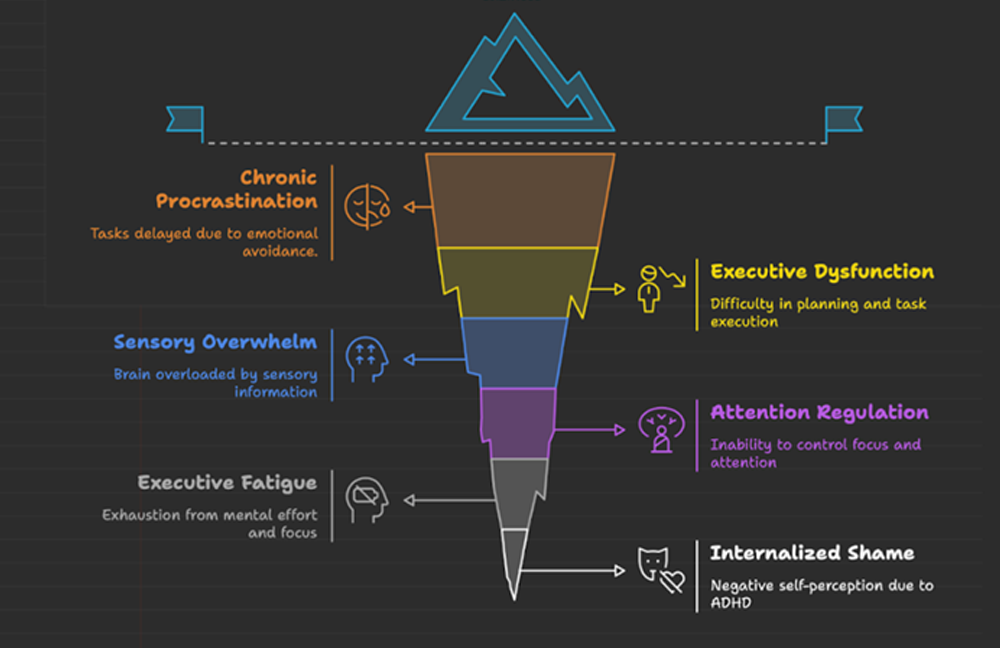
ADHD is not about a lack of willpower. It’s about executive function and dopamine regulation, two systems that affect how we start, plan, and follow through on tasks. But because these struggles are invisible, society often misreads them as disinterest, defiance, or irresponsibility. This misunderstanding fuels shame, delays diagnosis, and keeps people from the very support that could help them thrive.
In this article, we’ll unpack the science behind ADHD, dismantle the myth of laziness, and explore the real-world impact of stigma, from school and work to family and self-esteem. We’ll also share practical, brain-friendly strategies and neuro-affirming ways to talk about ADHD, so that we can replace judgment with understanding.
Stigma around ADHD: The Profound Impact of the 'Lazy' Label
The mislabeling of ADHD symptoms as ‘laziness’ has devastating, far-reaching consequences that extend far beyond individual self-esteem.
Consequences of Misconceptions
The most immediate impact is the deep-seated shame and guilt experienced by individuals with ADHD. When told they are lazy, unmotivated, or not trying hard enough, they internalize these messages. This leads to:
- Dismisses and Blames: People often say things like "ADHD isn't real" or "It's just bad parenting", and these statements do real harm. When someone brushes it off as an "excuse" or blames it entirely on parenting, it creates a deep sense of shame, both for the person struggling and for their family. This kind of thinking stops people from getting the support they need. It tells children and adults with ADHD that their challenges are just personal failures. It pressures parents to “discipline better” instead of seeking professional help.
- Self-Blame: When they constantly hear, ‘You're not trying hard enough’ they eventually turn that criticism inwards. Every missed chore, deadline becomes ‘my fault’ in their minds. "I know what I have to do but I can’t accomplish anything. It’s like a brick wall is standing in front of me. It’s so frustrating that I want to cry-yell-spit and scream." This internal conflict is agonizing.
A client said: “I was 28 when I finally got my ADHD diagnosis. My whole life, I’d been called lazy , by teachers, managers, even my own inner voice. In school, my report cards always said ‘bright, but doesn’t apply herself.’ I believed it. I thought I was just weak. I’d stare at my to-do list until the guilt sat like a stone in my stomach, then scroll my phone for hours, hating myself more with every minute. When I came to Coach For Mind, I expected another lecture about ‘discipline.’ Instead, my therapist explained executive dysfunction in a way that finally made sense. We mapped out my personal ‘stuck points,’ and she gave me micro-step strategies so small they felt doable , like setting a timer for just 3 minutes of work. Slowly, I began to see my challenges not as proof I was lazy, but as patterns my brain needed help to navigate. For the first time, I stopped calling myself useless.”
- Low Self-Worth: When shame and guilt pile up, self worth takes a nosedive. People with ADHD start to believe that they're not reliable nor capable. They might also stop aiming for bigger goals because of the belief that they'll fail.
- Mental Health Struggles: Anxiety rises because tasks feel overwhelming, creating a chain of procrastination and panic to meet deadlines. Depression can creep in as motivation and energy drain away. Burnout is common because some people try to prove they’re not lazy by pushing themselves to exhaustion, while others withdraw and stop trying altogether. Increased rates of anxiety, depression, and even suicidal ideation due to chronic failure and self-criticism.
- ADHD Medications: This stigma paints ADHD medications as harmful or addictive, making people afraid to even consider them. It often comes from misinformation or isolated incidents rather than scientific facts. In reality, medications like stimulants are thoroughly researched, regulated, and often life-changing when used correctly under medical guidance. For many, they help calm the chaos in their brain, improve focus, and reduce overwhelm. Stigma like this can stop someone from getting relief they desperately need, just because of fear, not facts.
- Delayed Diagnosis & Treatment: This stigma keeps people suffering in silence. When ADHD is misunderstood or judged harshly, many delay asking for help out of fear they'll be labelled lazy, dramatic, or attention-seeking. They start believing they just need to “try harder” or “get it together,” instead of realizing there's a valid reason for their struggles. This delay can lead to years of frustration, low self-esteem, academic or work difficulties, and strained relationships, all of which could have been eased with early support and understanding.
These personal and emotional costs aren’t isolated, they ripple outward, shaping how schools, workplaces, and even healthcare systems respond to ADHD. Understanding these systemic effects helps us see that dismantling the “lazy” myth isn’t just about helping individuals, it’s about changing the environments that fail them.
Societal and Systemic Impacts
Beyond the individual, the "laziness" stereotype perpetuates systemic failures:
- Educational System Failures: Teachers, lacking understanding, may punish or dismiss students with ADHD, rather than providing necessary accommodations. They might think a student is simply not paying attention on purpose when really their brain is struggling to focus on the tasks at hand without getting distracted. This can lead to academic underachievement, missed opportunities, school dropouts, and a disengagement from learning.
A teenage client said: “In 9th grade, my math teacher told the whole class I was the laziest student she’d ever met because I never turned in homework. What she didn’t see was me crying over the same three problems for hours every night, stuck in a loop of trying to start but freezing. By the time I found out it was ADHD, I’d already decided I wasn’t ‘school material.’,. My therapist at Coach For Mind worked with both me and my parents to reframe what was happening. She explained to my family that I wasn’t avoiding work, my brain was hitting a neurological roadblock. Together, we set up visual progress boards, built in movement breaks, and negotiated with teachers for more flexible deadlines. That changed everything , I went from hiding my homework to actually finishing it, not because I suddenly became ‘motivated,’ but because the process was finally designed for my brain.”
- Workplace Discrimination: Adults with ADHD face challenges in professional settings, where their executive function deficits are seen as poor performance or lack of dedication, hindering career progression and leading to job loss. Missing deadlines, needing reminders or struggling to prioritise can be mistaken for a lack of commitment or laziness. The constant need to mask the struggles to avoid judgement can lead to exhaustion and stress.
- Healthcare Barriers: The stigma makes individuals hesitant to seek diagnosis or treatment, fearing judgment or being seen as ‘making excuses’. Even within healthcare, a ‘behavior-based’ diagnostic approach, rather than a ‘causal neurological understanding’, can lead to inadequate support. Behaviour based diagnosis results in negative labeling of people and being dismissed as ‘lazy’, ‘careless’, or ‘irresponsible’ leading to low self-esteem. Behaviours like disorganisation, impulsivity or restlessness would be seen as character flaws or voluntary choices rather than symptoms of a neurological difference. This believes that the cure for ADHD is sheer willpower and effort which is ineffective whereas from a causal neurological perspective, ADHD has a genetic basis and is not caused simply by bad parenting or family dysfunction. It takes into consideration the brain’s structural and functional difference to that of typical people as well. If the healthcare system buys into the belief that someone is lazy then they might not refer them for ADHD testing, especially in adults.
- Legal Implications: In some contexts, perceived ‘laziness’ or unreliability can have legal repercussions, affecting child custody, disability claims, or even criminal justice outcomes. For example, an employee fired for their ‘underperformance’ might not have their condition be considered.
- Intersectionality: The ‘laziness’ stereotype can intersect with other identities, exacerbating disparities. For example, women with ADHD might be dismissed as ‘emotional’ or ‘disorganized’, while people of color might be unfairly seen as defiant or unmotivated. Those from lower-income backgrounds may not have access to testing or treatment at all.
The neurodiversity movement actively seeks to reframe the ‘laziness’ myth, advocating for ADHD to be recognized as a legitimate neurodevelopmental disorder and empowering individuals to embrace their unique brain wiring.
“The DSM defines attention deficit disorder by its external features, not by its emotional meaning in the lives of individual human beings.” - Gabor Maté, renowned expert on trauma and ADHD.
When stigma becomes embedded in our systems, it stops being just a matter of personal misunderstanding, it becomes a structural barrier to support. To address ADHD stigma effectively, we need to challenge not only how people think, but how institutions diagnose, accommodate, and communicate about it. This is where the neurodiversity perspective begins to change the narrative.
Do you feel like you’re using ADHD as an excuse for laziness or demotivation?
It’s instinctive to feel like you’re using ADHD as an excuse for laziness or inaction. This doubt that ‘what if it’s not ADHD and I’m just labeling myself to protect myself’ doesn’t sprout from nowhere. It’s an amalgamation of years of frustration with self, criticism from others and self, along with the constant pressure to do better. It’s the incomplete tasks, missed deadlines, days where moving around feels too heavy, and instead of seeing underneath the struggles behind ADHD, you think, ‘Maybe I’m just really lazy’. Here’s what happens in such instances:
- The self-doubt spiral: You replay every moment you’ve struggled and convince yourself that you’re just not trying hard enough. This chips away at your self-trust, making it harder to believe your own lived experience.
- Increased guilt and shame: Instead of recognizing that your brain works differently, you feel guilty for ‘not doing more’, which piles onto the shame you may already carry.
- Avoidance of help: If you believe you’re just lazy, you may stop seeking support or treatment because you think you don’t ‘deserve’ it.
- Paralysis gets worse: The pressure to prove you’re not lazy can backfire, creating so much anxiety that you freeze up even more.
- Loss of compassion: You stop giving yourself compassion and kindness and every stumble feels like proof that you’re failing as a person.
A reddit user says, “ADHD people are not lazy, this isn't some character flaw or anything of the sort. It's a genetic condition, where your brain doesn't produce an appropriate amount of dopamine.”
This spiral of self-doubt and guilt is exactly why reframing ADHD as a neurological difference is essential. Once we step away from moral judgment, we can begin to explore the brain-based science behind why initiation, follow-through, and regulation can be such uphill battles.
Public Perception of ADHD Medication
ADHD medications, especially stimulants like methylphenidate and amphetamines, are some of the most researched psychiatric medicines in the world. Decades of studies show that these medications can be highly effective, especially when combined with therapy, lifestyle changes, and support systems. They are not pills that make someone instantly focused or emotionally regulated. What they do is help regulate the dopamine levels in the brain which ADHD people struggle with. This helps improve attention, impulse control and emotional regulation. For many, medication makes everyday tasks, like starting work, following instructions, remembering things more manageable. It doesn't give extra abilities. It balances the ADHD brain.
Despite the strong evidence, public perception, especially in countries like India, is full of myths, fear, and stigma. Common fears and misconceptions include:
- It’s just a chemical shortcut. Many people think medication is a lazy way out, or something only people who don’t want to try hard enough use.
- It’s addictive. While stimulant medications have a potential for misuse when not prescribed or monitored properly, they are not addictive when used as prescribed.
- It changes your personality. Medicines don’t change someone. They don’t dull creativity or erase your individuality. When the dosage is right, people often say they feel more like themselves.
- It’s a Western thing. ADHD is real across cultures. Just because it’s more talked about in the West doesn’t mean it doesn’t affect Indian families, students, or professionals. Underdiagnosis and lack of awareness just keep it hidden longer here.
A female client said: When my doctor suggested ADHD meds, my parents begged me not to take them , they said I’d get addicted, that it was ‘just chemicals messing with your brain.’ It took me two years to try them. The first week on the right dose, I cried in relief. I could finally start a task without the crushing resistance. I wish I’d had that help sooner. Therapist at Coach For Mind provided research on how ADHD medications actually work, debunking the myths my family believed. She also helped me monitor my symptoms, side effects, and daily functioning so I could share clear, objective feedback with my psychiatrist. Having that professional support meant I felt confident in my treatment choice , and my family eventually saw the difference and stopped opposing it.”
In reality, when taken as prescribed, they are safe, evidence-based, and thoroughly studied. Long-term benefits include better academic and job performance, reduced anxiety, and improved self-esteem.
If stigma keeps people from even considering one of the most effective treatment tools available, the result is needless suffering. To move forward, we need to clear the air with facts, not fear, just as we must with ADHD’s frequent co-occurring conditions.
How ADHD often co-exists with other conditions
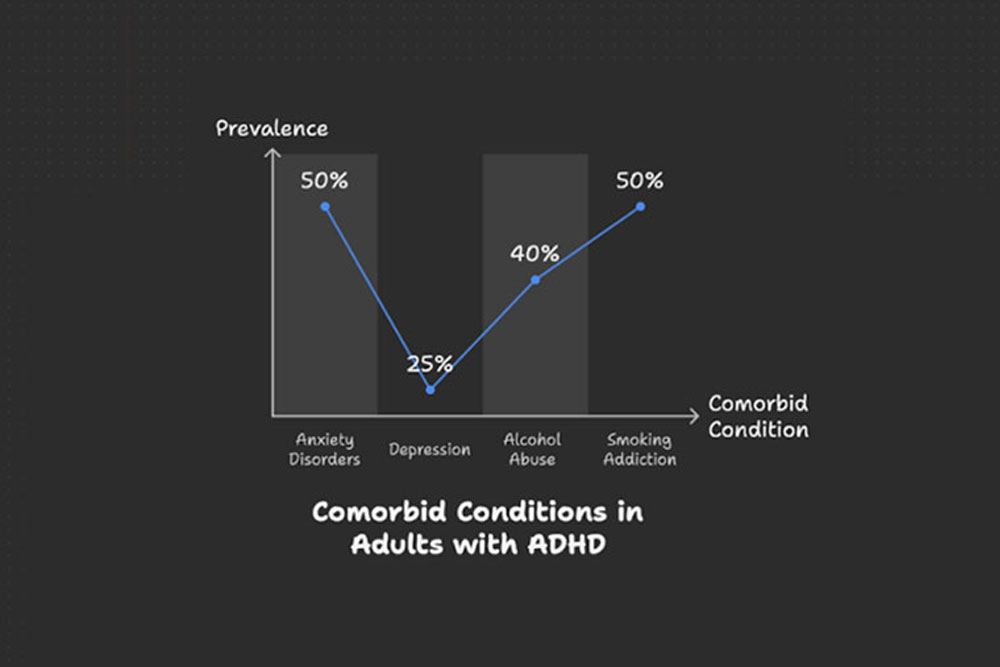
ADHD rarely occurs in isolation. Research shows that approximately 70% of adults with ADHD also experience another mental health condition, making comorbidity the rule rather than the exception.
- Anxiety Disorders: Anxiety disorders represent one of the most common comorbidities in ADHD, affecting up to 50% of people with ADHD. Most adults with undiagnosed, untreated ADHD experience a mild form of post-traumatic stress disorder (PTSD) due to repeated episodes of humiliation, rejection, and failure. ADHD may also make individuals inclined towards traumatic situations and prevent them from processing their painful experiences, making them more susceptible to PTSD. ADHD can manifest as chronic anxiety, stemming from the stress of constantly forgetting obligations, daydreaming, acting impulsively, being late, or missing deadlines.
The relationship between ADHD and anxiety is bidirectional and complex. Inattention may develop secondary to anxiety, while anxiety symptoms can worsen attention difficulties, creating a self-perpetuating cycle. Individuals with both conditions often experience:
- More severe ADHD symptoms and greater emotional dysregulation
- Working memory deficiencies that compound both attention problems and anxiety
- Higher risk of hospitalization and psychotic symptoms
- Sleep disturbances, including delayed sleep onset and reduced sleep duration
- Increased daily stress and reduced coping abilities
The chronic stress of managing ADHD symptoms, constantly forgetting obligations, acting impulsively, being late, or missing deadlines, can manifest as persistent anxiety that significantly impacts daily functioning.
- Depression: Mood disorders, including depression, occur in about 25% of people with ADHD. A mild but long-term sadness, known as dysthymia, is also common. Depression in ADHD is often a secondary problem, developing from years of frustration, failure, and underachievement due to undiagnosed ADHD symptoms. People constantly experience sadness, overwhelming emotions due to ADHD. The overlapping symptoms between these conditions include:
- Inattention and concentration difficulties
- Psychomotor agitation and restlessness
- Shared deficits in reward processing and motivation
Both conditions involve disrupted dopamine and norepinephrine transmission, particularly in brain regions like the ventral striatum, suggesting common neurobiological pathways. The presence of comorbid depression typically results in greater disease burden, longer illness duration, and reduced treatment effectiveness compared to either condition alone.
- Obsessive-Compulsive Disorder (OCD): OCD can coexist with ADHD. Symptoms of OCD include driven, ritualistic thinking, compulsive, repetitive behavior; intrusive, unpleasant thoughts. Like ADHD, it is a biologically based disorder. The symptoms of one condition can mask the other, making accurate diagnosis challenging but crucial, as their treatments differ. Some individuals with ADHD may use worry as an organizational tool, obsessing over trivial matters, which can sometimes resemble OCD.
- Rejection Sensitive Dysphoria (RSD): Rejection Sensitive Dysphoria is a term used to describe the intense emotional pain people with ADHD often feel in response to perceived criticism, rejection, or failure, whether real or imagined. RSD is not a separate clinical diagnosis, but a highly distressing emotional response that appears in many individuals with ADHD.
Those with RSD may:
- Feel crushed by mild disapproval
- Avoid relationships or opportunities to protect themselves from potential rejection
- Unable to take constructive feedback
- Spiral into shame or self-blame after social interactions
This emotional response is so immediate and overwhelming, it can look like mood instability or even mimic traits of borderline personality disorder. At Coach For Mind, we help clients learn to recognize RSD as part of their neurobiology and develop strategies to regulate it without internalizing it as a flaw.
- Addictions & Substance Abuse: Addictions and near-addictions are very common in adults with ADHD. For example, studies show about 40% of adults with ADHD drink too much alcohol and struggle with alcohol use, and approximately 50% cannot quit smoking. This is often a form of self-medication to manage inner feelings of boredom, dysphoria, or restlessness. For instance, cocaine can help people with ADHD focus, similar to stimulant medication, leading to chronic use. Since people with ADHD cannot find pleasure in ordinary ways, they tend to seek it via extraordinary means like gambling, overeating, drinking. Children with ADHD might instinctively seek excitement, danger or conflict to change their inner state of boredom.
- Impulsivity and reward-seeking can lead to compulsive behavior patterns without the person fully understanding why
Treatment must focus not just on substance use, but on the underlying ADHD symptoms that fuel it.
- Learning Disabilities & Reading problems: Learning problems, particularly dyslexia, frequently accompany ADHD, occurring in about 20% of cases. ADHD can aggravate learning difficulties by making it hard to focus, even for intelligent individuals. Individuals with both dyslexia and ADHD can be highly creative and intuitive, and with proper diagnosis and treatment, they can thrive.
- Behavioural conditions like Oppositional Defiant Disorder, Conduct Disorder, Antisocial Personality Disorder: These aggressive or defiant behaviors can mask or occur alongside ADHD. Many individuals in the justice system diagnosed with antisocial personality disorder or conduct disorder may have undiagnosed ADHD. Their violent behavior may stem from frustration intolerance and impulsivity related to ADHD, rather than a defect in conscience. Proper ADHD treatment can lead to positive changes.
Co-occurring conditions don’t just complicate diagnosis, they deepen the stigma when misunderstood. Recognizing these overlaps helps us create treatment approaches that address the whole person, not just one label. From there, we can shift into practical strategies that meet ADHD brains where they are.
Beyond the Myth: Practical Strategies for Thriving with ADHD
Understanding that ADHD is not laziness is the crucial first step. The next is implementing effective, neuro-affirming strategies for management and support.
Comprehensive Treatment Approaches
While there's debate on the role of medication, most experts agree that ADHD is treatable with a combination of approaches:
- Medication: For many, stimulant medications significantly improve dopamine regulation, making executive functions more accessible. "The first time I took meds, I cried because I realized how needlessly hard my life had been," is a common sentiment. While not a "chemical shortcut" or a "cure," medication can be a powerful tool to level the playing field.
- Behavioral Interventions & Therapy: Cognitive Behavioral Therapy (CBT) and ADHD therapy in India at Coach For Mind and ADHD-specific coaching can help individuals develop coping skills, organizational strategies, and emotional regulation techniques. These help with organization, planning, time management, and task initiation. They assist in breaking down large tasks into smaller, manageable parts and setting up external structures like lists, reminders, and schedules to compensate for unreliable internal controls. Coaches encourage individuals to believe in their own abilities, persevere through challenges, and learn from mistakes. They also conduct regular check-ins to review plans, any upcoming engagements, focusing on practical and concrete steps.
- Dialectical Behavior Therapy (DBT): DBT Therapist at Coach For Mind can be particularly beneficial for individuals with severe emotional dysregulation. It helps with distress tolerance, emotion regulation, interpersonal effectiveness, and mindfulness. Modified pacing and repetition can help accommodate attention challenges.
As ADHD expert Dr. Russell Barkley explains in his landmark handbook, ADHD is rooted in measurable impairments in executive functioning, initiation, planning, working memory, and self-regulation, caused by differences in brain networks, not a lack of willpower or moral failing. This research underscores what so many with ADHD already know: they’re not failing because they don’t care, they’re struggling because their brain is wired differently.
- Lifestyle Adjustments:
- Sleep Hygiene: Good sleep hygiene means going to bed and waking up at the same time every day, even on weekends, creating a ‘wind-down’ routine that tells the brain it’s time to rest like dim lights, avoid screens, read something calming, or limiting caffeine late in the day.
- Exercise: Physical activity isn’t just good for the body, it’s great for the ADHD brain. Exercise helps elevate dopamine and norepinephrine, the same brain chemicals that ADHD medications target, which means it can improve motivation, focus, and mood. It also reduces restlessness and anxiety. This doesn’t have to be a hardcore gym routine; activities like brisk walking, dancing, yoga, swimming, or even short bursts of jumping jacks can help. The key is to make it enjoyable, so the brain actually wants to keep doing it.
- Nutrition: The brain needs steady fuel to function well. Skipping meals, eating too much sugar, or relying on highly processed foods can cause energy crashes, mood dips, and brain fog. A balanced diet means including protein with every meal, eating complex carbs like whole grains and vegetables to avoid sugar spikes and crashes along with staying hydrated.
- Mindfulness: Practices like meditation, deep breathing, or simply paying attention to what you’re doing in the present moment can help improve focus and emotional control. For someone with ADHD, mindfulness doesn’t mean sitting still for an hour; even two minutes of deep breathing before a task can reset the brain. Over time, mindfulness can make it easier to pause before reacting, catch distractions sooner, and stay grounded when emotions spike.
While no single strategy works for everyone, the most effective approaches are those that align with the way ADHD brains actually function. But even the best tools can fall flat if the environment around someone is rooted in misunderstanding. That’s why the language we use matters just as much as the strategies themselves.
Tailored Coping Mechanisms and Environmental Modifications
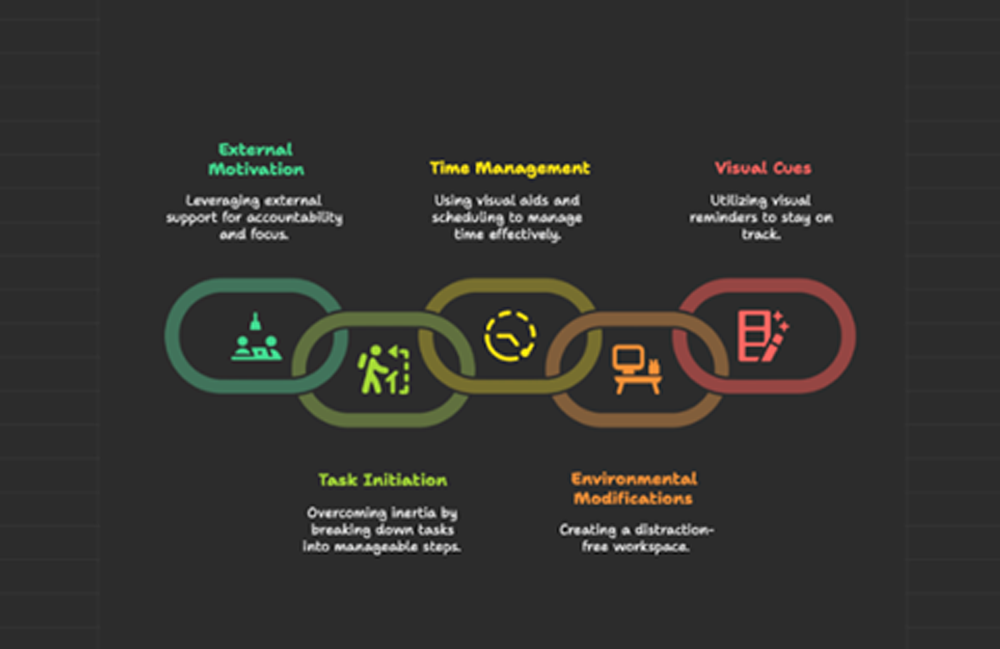
Generic advice like "just use a planner" often falls flat for ADHD brains. Instead, focus on strategies that accommodate executive dysfunction:
- External Motivation & Accountability:
- Body Doubling: Working alongside someone (even virtually) can provide unspoken accountability and focus.
- Accountability Partners: Regularly checking in with a trusted friend or colleague.
- Gamification: Turning tasks into games or challenges to leverage the brain's desire for novelty and reward.
- Task Initiation & Breakdown:
- The 5-Minute Rule: Commit to working on a dreaded task for just 5 minutes. Often, getting started is the hardest part.
- Task Chunking: Break large tasks into tiny, manageable steps.
- "First Step" Focus: Identify the absolute smallest first action and focus only on that.
- Managing Time Blindness:
- Visual Timers: Use physical or digital timers that show time visibly depleting.
- Time Blocking: Schedule specific blocks for tasks, including transition time.
- External Deadlines: Create artificial deadlines or enlist others to set them.
- Environmental Modifications:
- Minimize Distractions: Create a dedicated, clutter-free workspace.
- Noise-Canceling Headphones: Block out auditory distractions.
- Visual Cues: Use whiteboards, sticky notes, and visual reminders.
These strategies are not about "trying harder"; they are about working with your ADHD brain, not against it.
Changing the language changes the lens, and when we change the lens, we make space for compassion, effective support, and real progress. To make this shift permanent, we also need to equip parents, teachers, and employers with the tools to recognize and respond to ADHD without judgment.
Fostering a Neuro-Affirming Environment
The ultimate goal is to move beyond mere tolerance to genuine understanding and support. This requires a shift in language, perspective, and systemic approaches.
The Profound Impact of Language: Neuro-Affirming Communication
The wrong language can deepen shame, while the right language can plant seeds of self-acceptance. Many adults with ADHD have spent years hearing words that label them as flawed rather than recognizing their brain differences. Over time, these words become internalized, turning into a critical inner voice that’s hard to silence.
New research by Kroll and colleagues shows that identity-affirming language, language that frames ADHD as a difference, not a defect, can measurably improve self-esteem, reduce internalized shame, and increase therapy engagement. In other words, the words we use don’t just describe reality, they can change
- Avoid "Red Light Words":
Some words may seem harmless or casual, but when used to describe someone with ADHD, they can do real damage. These “Red Light Words” not only misrepresent the challenges of ADHD, they also reinforce stigma, create shame, and frame neurodevelopmental differences as personal failures.
At Coach For Mind, we encourage families, educators, therapists, and individuals themselves to be mindful of language that labels character instead of just recognizing neurological reality.
Words to Avoid and Why They Hurt
- “Lazy”: Dismisses effort and ignores the invisible barriers created by executive dysfunction. ADHD is rarely about not wanting to act, it’s about not being able to in the moment.
- “Unmotivated”: Overlooks how ADHD brains rely on interest-based attention and need adequate dopamine to engage. It’s not about apathy; it’s about neurological wiring.
- “Disorganized” (when used judgmentally): Turns a symptom into a moral flaw, rather than recognizing struggles with planning, sequencing, and working memory.
- “Just try harder”: Assumes willpower is the problem, ignoring the reality that effort alone can’t override impaired executive function.
- “You’re so smart, why can’t you just...”: Creates a painful split between intelligence and performance, fueling shame and self-doubt.
- “It’s just an excuse”: Invalidates the lived experience of ADHD and implies manipulation where there is real suffering.
- “Should”: Often used in statements like “You should be able to do this by now,” which implies failure to meet neurotypical standards and fosters guilt and shame.
- “Careless”: Suggests a lack of concern or effort, when in reality the person may be deeply overwhelmed or overstimulated.
- “Irresponsible”: Frames forgetfulness or missed deadlines as character flaws, not as executive function challenges.
- “Rude”: Misinterprets impulsive behaviors or difficulty with social timing as intentional disrespect.
- “Spacey”: Dismisses inattentive symptoms, often in girls and women, as quirky or dreamy rather than identifying them as ADHD-related.
Why These Words Are Harmful
Each of these words carries judgment, not just of behavior, but of the person itself. They imply that the individual chooses to fail, to forget, or to be disrespectful. In doing so, they:
- Pathologize personality rather than acknowledging neurological difference
- Fuel internalized shame in individuals who are already trying their best
- Discourage help-seeking by labeling real symptoms as character flaws
- Reinforce the idea that if someone looks capable, they must be choosing not to act
Instead of labeling, we can ask:
- What support does this person need to succeed?
- What’s getting in the way, and how can we understand it through a neurological lens?
- “What barriers are in their environment, nervous system, or workload?”
- “Are their sensory, emotional, or cognitive needs being met?”
- “What kind of executive function support might help them get started?”
- What skills or tools could reduce the overwhelm of starting or finishing tasks?
Embrace Neuro-Affirming Alternatives:
The way we talk about ADHD matters, not just in how others see it, but in how people with ADHD come to see themselves.
Too often, language used to describe ADHD is filled with judgment or blame. Words like “lazy,” “disorganized,” or “unmotivated” don’t reflect the true inner experience of someone navigating executive function challenges. These labels not only misrepresent what’s happening neurologically, they also chip away at self-worth.
At Coach For Mind, we advocate for neuro-affirming language, language that validates ADHD as a neurological difference rather than a deficit. This approach respects both the strengths and the real struggles of ADHD, while promoting self-understanding and compassion.
Reframing Common Labels with Neuro-Affirming Alternatives
Language can acknowledge the difficulty without stripping away dignity. Here’s how we can reframe:
- Instead of “lazy”, say “struggling with task initiation” or “experiencing executive dysfunction.”
- Instead of “unmotivated”, consider “lacking sufficient dopamine for sustained engagement.”
- Instead of “disorganized”, try “facing challenges with planning and prioritization.”
- Instead of “making excuses”, acknowledge “encountering neurological barriers.”
- Instead of “impaired”, say “experiences challenges with...”
These shifts are not about sugarcoating. They are about naming the reality accurately, in a way that preserves agency, invites curiosity, and nurtures self-respect.
Key Principles of Neuro-Affirming Language
- Person-Centered Approach: See the whole person, not just their diagnosis. ADHD is one part of their identity, not the totality.
- Strength-Focused Perspective: Recognize and honor the creativity, empathy, resilience, and insight often found in neurodivergent individuals.
- Accurate Description: Use language that reflects neurological truths rather than character judgments.
- Respectful Tone: Avoid words that imply something is “broken” or “wrong.” Focus instead on difference and support.
The Neuroscience of Language Impact
Language doesn't just describe experience, it shapes it. Studies show that the words we use directly affect mental health outcomes, especially for neurodivergent individuals.
According to Kroll et al. (2024), identity-affirming language leads to:
- Reduced stigma, by framing differences as variations rather than flaws
- Improved self-esteem, by validating lived experience and reducing internalized shame
- Better treatment outcomes, by supporting hope and enhancing engagement in therapy
- Stronger community connection, through inclusive, empowering communication
When people can talk about their ADHD without shame, they begin to advocate for themselves with clarity. They stop asking, “What’s wrong with me?” and start asking, “What kind of support does my brain need to thrive?”
At Coach For Mind, we teach clients, families, and educators to use language that reflects truth with compassion. It’s a small shift, but one that opens the door to deeper healing, better relationships, and a more empowered sense of identity.
Educating Parents, Teachers, and Employers
Proactive, preventative measures are crucial to prevent the "lazy" label from being applied in the first place.
- For Parents:
- Educate Yourself: Understand the neurobiological basis of ADHD.
- Validate Experiences: Believe your child when they say something feels hard, even if it looks easy to you.
- Focus on Strengths: Acknowledge their hyperfocus, creativity, and energy.
- Collaborate: Work with schools and healthcare providers.
- For Educators:
- Training: Provide comprehensive training on ADHD, including its varied presentations (especially inattentive type and in girls).
- Accommodations: Implement evidence-based accommodations (e.g., extended time, movement breaks, clear instructions, visual aids).
- Positive Reinforcement: Focus on effort and progress, not just outcomes.
- For Employers:
- Flexibility: Offer flexible work arrangements, such as remote work or modified schedules.
- Clear Communication: Provide instructions in writing and break down large projects.
- Supportive Environment: Foster a culture that values neurodiversity and provides reasonable accommodations.
- Focus on Output: Judge employees on results, not on traditional measures of "busyness" or "desk time."
Self-Advocacy and Disclosure
Navigating external judgment and deciding when and how to disclose an ADHD diagnosis is a personal journey.
- Educate Others: One of the most powerful tools in self-advocacy is having a simple, clear way to explain ADHD and how it affects you personally. Over time, this also helps break stereotypes and shifts people’s understanding from ‘lazy’ to ‘this is a real difference in brain wiring’.
- Set Boundaries: You are not required to defend your ADHD to every person who questions it. Some people will genuinely want to understand; others just want to debate or dismiss you. So preserve your energy. If someone repeatedly minimizes your experience or makes hurtful jokes, you can politely but firmly say, “I’m not comfortable talking about this with you.” Boundaries aren’t about cutting people off immediately, they’re about you being respected.
- Choose Wisely: Everyone doesn’t need to know you have ADHD. Think about the environment and the person before you share. Will they be supportive, or will they use it against you? Disclosing ADHD to a trusted friend, mentor, or understanding manager can help you get accommodations and empathy. On the other hand, in a toxic workplace or with a judgmental relative, keeping it private might protect your peace.
- Self-Compassion: Self-advocacy starts with how you treat yourself. ADHD can come with years of feeling ‘less than’, so it’s easy to internalize shame. Remind yourself daily: “My struggles are not because I’m lazy or broken. My brain is wired differently, and that’s valid.” Surround yourself with stories of other people with ADHD, whether through books, podcasts, or support groups which helps to realise that you’re not alone in this.
A client said: “For years, I just told people I was ‘bad at adulting.’ When I finally learned to say, ‘I have ADHD and this is how it shows up for me,’ something shifted. People either got it or didn’t , but I stopped spending so much energy trying to prove I wasn’t lazy. Therapist at Coach For Mind helped me create a short, clear way to explain ADHD that felt confident instead of defensive. We even wrote a personal ‘support needs’ list that I could share with friends and coworkers. Now, instead of hiding, I can ask for what I need , and I no longer feel like I have to earn the right to exist by overperforming.”
Awareness at the community and workplace level lays the foundation for a culture that sees ADHD for what it is, not a flaw, but a difference. And in that kind of culture, self-advocacy stops being a battle and starts becoming a way to thrive.
Conclusion: It's Time to Rewrite the Narrative
The pervasive mislabeling of ADHD as “laziness” is a deeply damaging and inaccurate narrative that has caused immeasurable pain and hindered effective support for millions. By understanding ADHD as a complex neurodevelopmental condition rooted in executive dysfunction and dopamine dysregulation, we can finally dismantle this myth.
The journey from self-blame to self-acceptance, from frustration to empowerment, begins with knowledge and empathy. It requires a collective effort to shift societal perceptions, educate our communities, and implement neuro-affirming strategies that truly support individuals with ADHD.
It's time to stop asking why they aren't trying harder and start asking how we can better support their unique brains to thrive.
What's your experience with the "laziness lie" and ADHD? Share your story or your favorite neuro-affirming strategy in the comments below. Let's build a community of understanding and support.
Why CoachForMind?
Experienced Psychologists: We are a team of licensed RCI-registered clinical psychologists in Gurgaon. Our team is well-experienced in various forms of ADHD treatment in India such as CBT, DBT, EMDR, and Narrative Therapy.
Personalized Approach: We are dedicated to treating our clients in the best-suited way, carefully curated as per the client's needs, and adhering to one-on-one, client-centered therapy.
Scientific Techniques: Our treatment plans and therapeutic methods are based on highly researched scientific findings such as CBT, DBT, IFS, EMDR and Narrative Therapy.
Quality service: We at CoachForMind ensure quality services in our treatment regime and therapeutic approaches. Our clients hold the most value to us, so we ground our techniques in empathy while maintaining professionalism.
Begin with a free 15-minute discovery call For more information, please visit our website or contact us directly at coachformind@gmail.com
Written by the therapists at Coach For Mind
FAQs: Understanding ADHD
Addressing common questions about ADHD, its misconceptions, and how it affects daily life
Yes, it is absolutely possible, and actually quite common, for people with ADHD to do well in school. In fact, many people with ADHD are very intelligent and do well academically. ADHD (Attention-Deficit/Hyperactivity Disorder) affects how a person regulates attention, impulses, and sometimes behavior, not intelligence or the ability to succeed. ADHD is a neurodevelopmental disorder and it affects how the brain processes information, particularly related to focus, impulsivity, and hyperactivity.
Some manage this through structure and routine, minimizing distractions, exploring multiple learning methods, using movement and sensory input, strong support systems, natural strengths, or by working extra hard to keep up. But that effort often comes at a cost. What others see as success can sometimes hide the stress, anxiety, or burnout happening behind the scenes.
At Coach For Mind, we look beyond the achievements. We focus on how a person is feeling inside and what patterns might be driving their need to keep performing. Many high-achieving individuals with ADHD learn early on to hide their struggles. They become experts at doing what's expected, even if it means pushing themselves too far.
Sometimes, this creates what we call a "false self", a version of themselves that looks confident and capable, but hides the pressure, confusion, and fear underneath. This often starts in childhood, especially if someone felt they had to earn love by being the "good" or "smart" one. Over time, even close friends or family may not notice the struggle behind the success.
At Coach For Mind, we help clients gently explore what it feels like to always be performing, and support them in finding a way to live that feels more real, more balanced, and less exhausting.
The word "lazy" gets used a lot especially in Asian subcontinent, but it's usually more of a judgment than a real explanation. Laziness is rarely the root cause of someone "not doing things." More often, what gets labeled as laziness is actually a symptom of something deeper.
| Looks like laziness | Could actually be... |
|---|---|
| Not starting tasks | Executive dysfunction (e.g., ADHD) |
| Can't focus or finish | Anxiety, depression, burnout |
| No motivation | Sleep deprivation, low dopamine, trauma |
| Avoiding everything | Fear of failure or perfectionism |
| Constant procrastination | Overwhelm, lack of clarity, lack of support |
When someone isn't doing something we think they should be doing, it's easy to label them as lazy. However, at Coach For Mind, we've seen that what looks like laziness on the surface often has something much deeper underneath. It might be avoidance. It might be burnout. Sometimes it's fear of failure, or the heavy weight of depression.
For many people with ADHD, it's actually a struggle with executive functioning or day to day management, the cognitive skills needed to plan, start, and finish tasks. These aren't signs of laziness but signs that something psychological or neurological getting in our way.
So instead of asking, "Why am I being lazy?" it's often more helpful to ask, "What's making this feel so hard right now?" That question opens the door to understanding, compassion, and change, and that's where Therapist at Coach For Mind would start.
Laziness usually means you could do something, but you're choosing not to, maybe because you're tired, uninterested, or just don't feel like it. There's often a sense of ease in that decision.
ADHD is different. It's not about not wanting to do the task. It's about wanting to and still not being able to. The internal experience sounds more like, "I care about this. I know it matters. I even want to get it done but I just can't seem to start."
ADHD is not a lack of willpower. It's a difficulty with executive function, the part of the brain that helps with organizing, prioritizing, starting, and following through. For someone with ADHD, it's not a matter of trying harder, it's about understanding how can we work through it.
At Coach For Mind, we help clients understand this difference and unlearn the shame that often comes from being mislabeled as lazy. Once we move past blame, we can start building real toolkit that would actually work for you.
Always remember with ADHD, it is not a choice, it's brain wiring.
ADHD is absolutely real. It's not just a trend or an excuse, it's a well-established neurodevelopmental condition supported by decades of scientific research.
Neuroscientific studies have shown measurable differences in brain structure and function in individuals with ADHD. For example, research using brain imaging has found differences in the size and activity of areas involved in attention, executive functioning, and impulse control, such as the prefrontal cortex, basal ganglia, and cerebellum (Castellanos et al., 2002; Rubia et al., 2014). ADHD is also associated with dysregulation in dopamine and norepinephrine pathways, which help regulate motivation and attention (Volkow et al., 2009).
People don't suddenly "get" ADHD to avoid responsibilities. It typically begins in childhood and often continues into adulthood. The American Psychiatric Association's Diagnostic and Statistical Manual of Mental Disorders (DSM-5) recognizes ADHD as a legitimate and impairing disorder, and so does the World Health Organization.
Yes, some people may misunderstand or even misuse the label but that's true of nearly any diagnosis. It doesn't make the condition itself any less real or valid for those who live with it every day.
At Coach For Mind, we work with many individuals who are motivated, intelligent, and capable but whose brains are wired differently. They want to stay focused, organized, and consistent, but they struggle with the internal mechanics of doing so. With the right support, tools, and strategies, ADHD can be managed.
However, calling it an excuse only adds unnecessary shame to what is already a deeply personal and real challenge for someone.
ADHD is one of the most misunderstood mental health conditions. It doesn't look the same in every person, myths and stereotypes often lead to judgment, misdiagnosis, and unnecessary shame. At Coach For Mind, we work with individuals and families to unlearn these misconceptions, so they can better understand themselves and support each other with clarity and compassion.
Here are some of the most common myths about ADHD and the truths behind them:
"ADHD is just about being hyper."
Truth: Hyperactivity is only one possible feature. Many people, especially women and girls, have inattentive-type ADHD, where symptoms are more internal: trouble focusing, disorganization, forgetfulness, and zoning out. These individuals often go unnoticed because they don't fit the "hyper and disruptive" stereotype.
"You can't have ADHD if you get good grades."
Truth: Success doesn't mean there isn't a struggle. Many people with ADHD work overtime to hold it together, sacrificing sleep, emotional well-being, or personal time just to keep up. Outward achievement often masks internal stress, anxiety, or burnout. Grades aren't the full story.
"ADHD is just an excuse for being lazy or unmotivated."
Truth: ADHD affects executive functioning, the brain's ability to plan, start, prioritize, and complete tasks. It's not about being lazy. Most people with ADHD care deeply and want to succeed, but their brain wiring makes the process harder. What looks like procrastination is often paralysis.
"Kids outgrow ADHD."
Truth: ADHD may look different over time, but it doesn't usually disappear. For many, it continues into adulthood, often in more subtle forms, like chronic disorganization, emotional overwhelm, or trouble with time management. Many adults only recognize it later in life after years of struggling without a clear reason.
"Everyone has a little ADHD these days."
Truth: While modern life is full of distractions, true ADHD isn't just about being busy or scattered. It involves consistent patterns of difficulty that cause real impairments across school, work, and relationships. It's not a personality quirk, it's a neurological condition.
"Medication is the only way to manage ADHD."
Truth: Medication can be a helpful tool, but it's not the only path. Therapist at Coach For Mind, coaching, daily structure, and emotional insight are powerful supports. At Coach For Mind, we help clients build systems and self-awareness that actually work with their unique brain, no shame, no "just try harder." Also, it is no approach fit all, we work as per your pace.
"ADHD is caused by bad parenting or lack of discipline."
Truth: ADHD is not caused by parenting style. It's a neurobiological condition influenced by genetics, brain development, and environment. That said, parenting can influence how well a child learns to manage their symptoms. Supportive, consistent, and emotionally attuned parenting helps, but the root cause is not discipline.
"ADHD is just a result of modern lifestyle, too much tech and not enough focus."
Truth: Modern life might exacerbate attention difficulties, but it doesn't cause ADHD. People with ADHD have shown signs long before smartphones and social media existed. What's different today is our awareness, not the condition itself.
"VAST is just a made-up version of ADHD for adults."
Truth: VAST (Variable Attention Stimulus Trait), coined by Dr. Edward Hallowell, describes a cluster of experiences similar to ADHD but often missed by traditional diagnostic models, especially in adults. VAST highlights emotional intensity, creativity, and deep sensitivity, along with challenges in attention and follow-through. It's not "fake ADHD," but a way to recognize the broader spectrum of neurodiversity that many live with.
At Coach For Mind, we often work with clients who may not meet every clinical criterion for ADHD but still resonate deeply with the internal experience. VAST can help give language to that experience, and open doors to understanding and support.
The truth is, ADHD is real, but stigma still exists. Too often, people with ADHD are judged for what others see on the surface, missed deadlines, forgetfulness, disorganization, without any awareness of what's actually going on underneath.
If you suspect you have ADHD, the most grounded and effective way to understand what's happening is through an ADHD assessment in India by a qualified mental health professional. Ideally, this would be someone who specializes in ADHD and understands how it can look different in adults, women, or high-achievers.
A good assessment will explore your life history, emotional patterns, executive functioning, and how symptoms show up across different areas of your life, not just in one moment or situation.
Even with a diagnosis, many people still feel they have to "prove" their struggle to others.
Here's what can help:
- Learn the language of ADHD so you can talk about your experience clearly and confidently.
- Share reliable resources with people close to you, family, teachers, managers, so they understand that ADHD is about brain wiring, not willpower.
- Set boundaries around harmful labels like "lazy" or "irresponsible." Those words don't reflect your reality.
- Find safe spaces, like Therapist at Coach For Mind, support groups, or neurodivergent communities, where you don't have to constantly explain or defend yourself.
At Coach For Mind, we help clients not only get clarity about whether they have ADHD, but also build the self-understanding and communication tools to navigate a world that often misunderstands them.
No, ADHD doesn't just disappear with age. It's a lifelong condition, not something children simply "grow out of." What does change is how the symptoms show up.
For example, a child who's physically hyperactive might grow into an adult who feels constantly restless, distracted, or mentally overloaded. The hyperactivity may no longer be obvious, but the internal experience is still very real.
Many adults with ADHD develop coping strategies over time, like relying on reminders, over-scheduling themselves, or becoming hyper-organized. These tools can help them function better, but they don't mean the ADHD is gone. In fact, it often becomes harder to spot because it hides behind these learned behaviors.
The good news is that ADHD can be very well managed with the right combination of Therapist at Coach For Mind, medication, and personalized strategies, many people find lasting relief and a greater sense of control. Treatment isn't about fixing a flaw, it's about learning to work with your brain instead of constantly fighting it.
At Coach For Mind, we help adults recognize that the struggles they've carried, difficulty with focus, time management, motivation, or emotional regulation, may have been ADHD all along. Diagnosis isn't just about labeling the past. It's about understanding your brain in the present and learning how to support it moving forward, with insight, compassion, and the right tools.