TL;DR
- Lifestyle Is a Force Multiplier, Not a Cure: Structured lifestyle changes — exercise, nutrition, sleep, environment, and social connection — do not replace medical treatment. They significantly amplify its effectiveness and, for some adults, make previously unmanageable symptoms workable.
- The Package Deal Effect: Research confirms that no single lifestyle change works in isolation. Improving sleep, nutrition, hydration, and physical activity together produces compound gains. Changing only one thing at a time rarely shifts the needle.
- Work With the Dopamine-Seeking Brain, Not Against It: The ADHD brain regulates attention through novelty, urgency, and emotional salience — not willpower. Sustainable lifestyle changes are built by designing low-friction systems that make healthy behaviour the path of least resistance, not by demanding more discipline.
- Exercise Is the Closest Thing to a Natural Stimulant: Physical activity — particularly vigorous cardiovascular movement — regulates the same dopamine and norepinephrine pathways targeted by ADHD medication. It is not a "nice to have." It is a neurological intervention.
- The Gut-Brain Axis Is Real: Mediterranean and DASH dietary patterns are inversely associated with ADHD symptom severity. Western and junk food patterns increase risk by up to 92%. The gut microbiome directly influences the neurotransmitter environment in which executive function operates.
- Social Support Predicts Thriving — Independently of Symptom Severity: Research confirms that strong social support — tangible help, a sense of belonging, and self-esteem reinforcement — improves daily functioning in adults with ADHD regardless of how severe the underlying symptoms are. Your environment matters as much as your neurology.
- ADHD Includes Measurable Strengths: Research with 200 adults identified ten strengths endorsed significantly more by people with ADHD than by neurotypical controls — including hyperfocus, humour, creativity, and spontaneity. A lifestyle that leverages these strengths is as clinically valid as one that manages the deficits.
- The Novelty Decay Problem Is Neurological: The ADHD brain's dopamine response to any new habit or system will inevitably habituate. Sustainable lifestyle management requires building in planned novelty — rotating methods while preserving the underlying behaviour.
Introduction: Life on Hard Mode and What Actually Helps
If you have ADHD and you have ever tried to build a sustainable routine, you already know something that most lifestyle advice fails to acknowledge: the standard prescription does not work.
Wake up at the same time every day. Exercise consistently. Eat regular meals. Keep your space tidy. Respond to messages promptly. Plan your week on Sunday. The advice is not wrong. The problem is that every single item on that list requires the reliable, automatic functioning of the very system, executive function, that ADHD fundamentally impairs.
It is like being told the solution to having poor eyesight is to simply look harder.
The result is a cycle that people with ADHD describe with painful familiarity: the burst of motivated effort at the start of a new system, the gradual decay as novelty fades, the collapse, the shame, and eventually the conclusion - wrong, and neurologically unjust.
In therapy, we often hear versions of the same story. A client will say something like:
“I know exactly what I’m supposed to do. I have read productivity books. Tried the planners. But it works for two weeks, and then everything collapses.” What follows is usually not laziness or lack of intelligence, it is the experience of trying to run neurotypical systems on a brain that regulates motivation, attention, and energy very differently.
This article is built on a different premise. The ADHD brain is not broken. It is differently organised, with a reward system calibrated for stimulation, novelty, and urgency, and an executive architecture that requires external scaffolding rather than internal discipline. The question is not how to force this brain to behave like a neurotypical one. The question is how to build a life that this brain can actually inhabit.
The answer, supported by a growing body of research, is specific, practical, and, critically designed to work with neurobiology rather than fight it.
Part One: How ADHD Shows Up in Daily Life
The Six Domains Where Lifestyle Is Most Affected
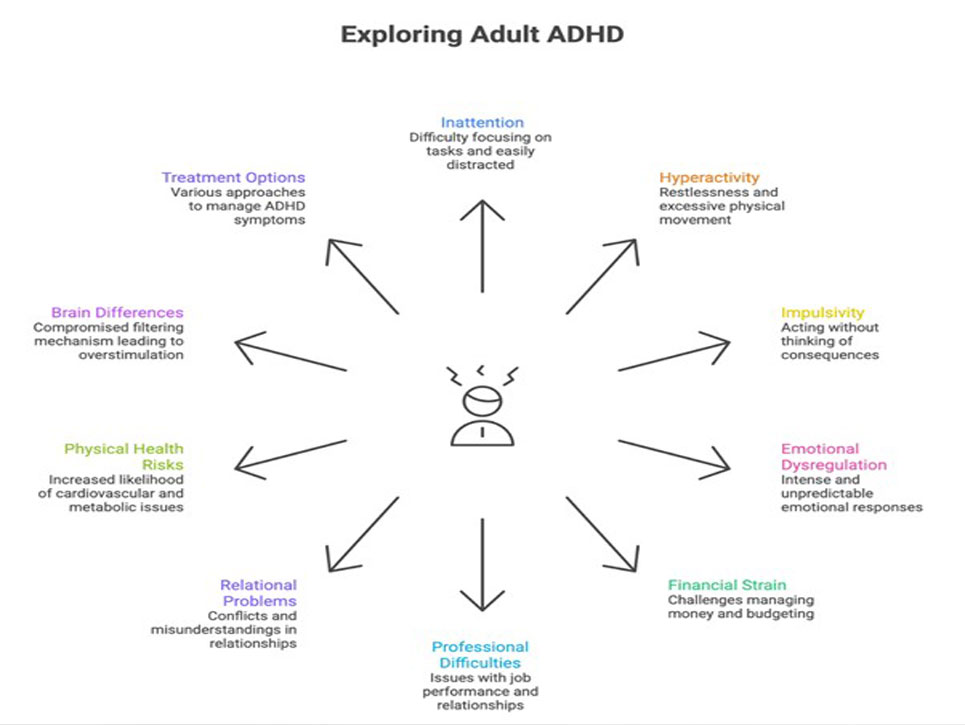
To understand why specific lifestyle interventions help, it is worth naming clearly what ADHD executive dysfunction actually disrupts in daily life. The clinical picture extends far beyond difficulty paying attention in meetings.
One client once described ADHD to us this way: “It’s not that I can’t pay attention. It’s that my attention has a mind of its own.” Science reflects this lived experience. ADHD affects several core systems that shape how we manage time, tasks, emotions, and sensory input in daily life.
Time blindness — not metaphorical imprecision about time, but a genuine neurological deficit in the brain's ability to perceive, estimate, and plan across time. The person with ADHD does not experience future tasks as having weight or proximity. The assignment due Friday feels the same on Monday as it does on Thursday evening.
Task initiation failure — what the ADHD community calls the "glass cage": knowing precisely what needs to be done, wanting to do it, and being genuinely, physically unable to start. This is not laziness. It is a failure of the neurological bridge between intention and action.
Working memory impairment — the cognitive desk on which active thinking happens is significantly smaller than average. Information falls off before it can be used. This affects everything from following a multi-step conversation to remembering what you walked into the kitchen to find. A useful way to imagine this is that the ADHD brain has a smaller mental “workspace.” Too many items arrive at once, and some simply slide off the desk before they can be used.
Emotional dysregulation and Rejection Sensitive Dysphoria (RSD) — the emotional amplification system runs at higher gain. Minor frustrations hit with disproportionate force. Perceived criticism or rejection can produce a physiological response that temporarily disables functioning.
In therapy, emotional dysregulation is often one of the most distressing aspects of ADHD. Many adults describe intense emotional responses that feel disproportionate even to themselves, especially around criticism, mistakes, or perceived rejection. ADHD-informed therapy often focuses on nervous system regulation, emotional processing, and repairing the shame that accumulates after years of misunderstood reactions.
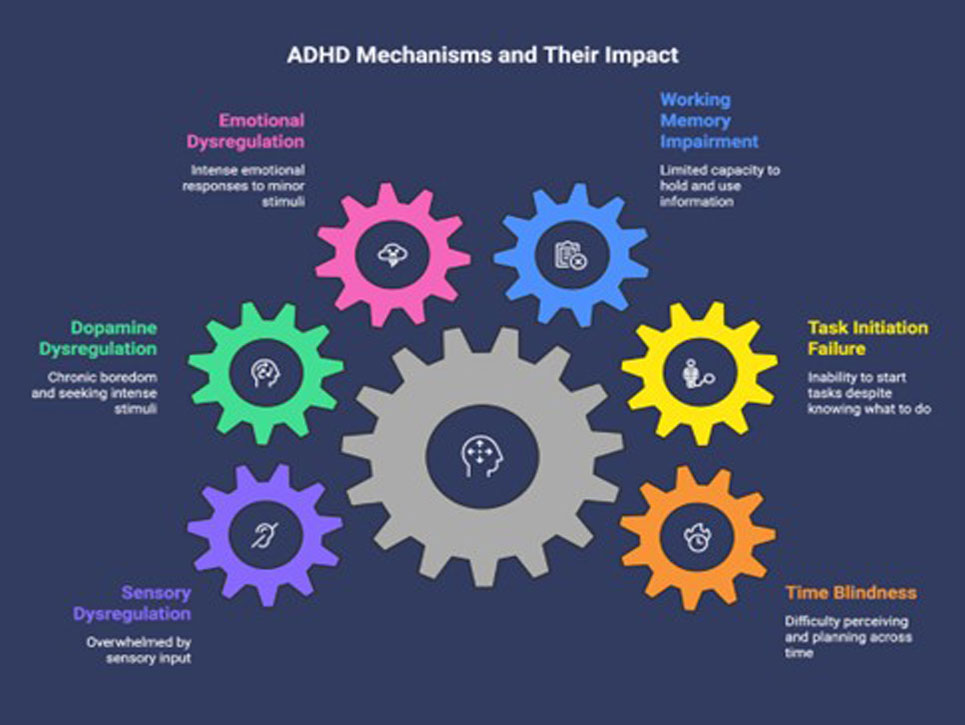
Dopamine dysregulation — the brain's reward system does not produce adequate dopamine in response to routine, low-stimulation activities. The result is chronic boredom that is not merely unpleasant but physically painful — and a powerful pull toward any stimulus that does provide a dopamine response, regardless of its long-term value.
Sensory dysregulation — Many adults with ADHD experience sensory environments as significantly more intense than neurotypical peers. Noise, light, tactile sensation, and environmental complexity consume cognitive bandwidth, leaving less available for executive task management.
Understanding these six mechanisms is the foundation of every effective lifestyle strategy described in this article. The strategies that work are those that directly address one or more of these mechanisms, not those that simply demand the person try harder. To read more about how you can build reliable systems, click here.
In ADHD-informed therapy at Coach For Mind, much of the work begins exactly here: understanding the underlying systems rather than blaming the outcomes. Once people recognise why certain struggles keep appearing, whether it’s task initiation, emotional intensity, or time perception, it becomes possible to design supports that actually work for the ADHD brain rather than against it.
Part Two: Exercise - The Closest Thing to a Natural Stimulant
The Neurological Case for Movement
Of all the lifestyle interventions with evidence for ADHD, vigorous physical exercise has the most compelling and direct neurological mechanism. This is not a wellness generalisation. It is a specific physiological claim: exercise regulates in the prefrontal cortex, the same neurochemical pathways, in the same brain region, targeted by ADHD stimulant medication.
A consistent body of research has documented that a single bout of vigorous aerobic exercise produces immediate improvements in attention, working memory, and impulse control in people with ADHD, effects that persist for 60 to 90 minutes post-exercise. These are not trivial improvements. For many adults, scheduling exercise immediately before the most demanding cognitive task of the day, the difficult conversation, the complex writing task, the high-stakes meeting, is one of the highest-leverage lifestyle interventions available.
The longer-term effects are equally significant. Regular sustained exercise produces structural changes in the prefrontal cortex - increased grey matter density in the regions most directly impaired in ADHD and increases baseline dopaminergic tone, reducing the severity of the "dopamine gap" that makes routine activity so difficult.
Which Type of Exercise and When
Not all exercise delivers the same neurological return. The evidence points toward specific characteristics:
Vigorous cardiovascular exercise: Running, cycling, swimming, HIIT, martial arts, appears to produce one of the strongest acute dopamine and norepinephrine responses. For adults with ADHD managing without medication, or managing on medication with residual symptoms, 20 to 30 minutes of vigorous cardio is a meaningful neurological intervention.
Meditative movement: Yoga and tai chi produces a different but complementary effect: increased parasympathetic tone, reduced anxiety, and direct practice of the attentional regulation that ADHD impairs. The evidence for yoga specifically as an ADHD intervention has strengthened considerably, with benefits including improved self-regulation and reduced hyperactivity.
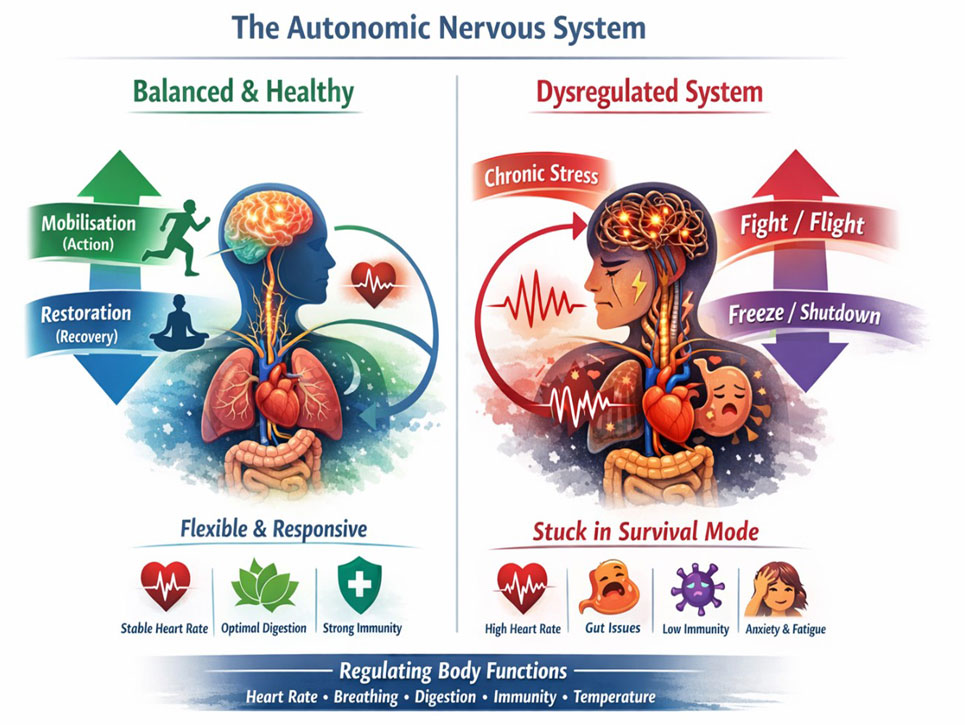
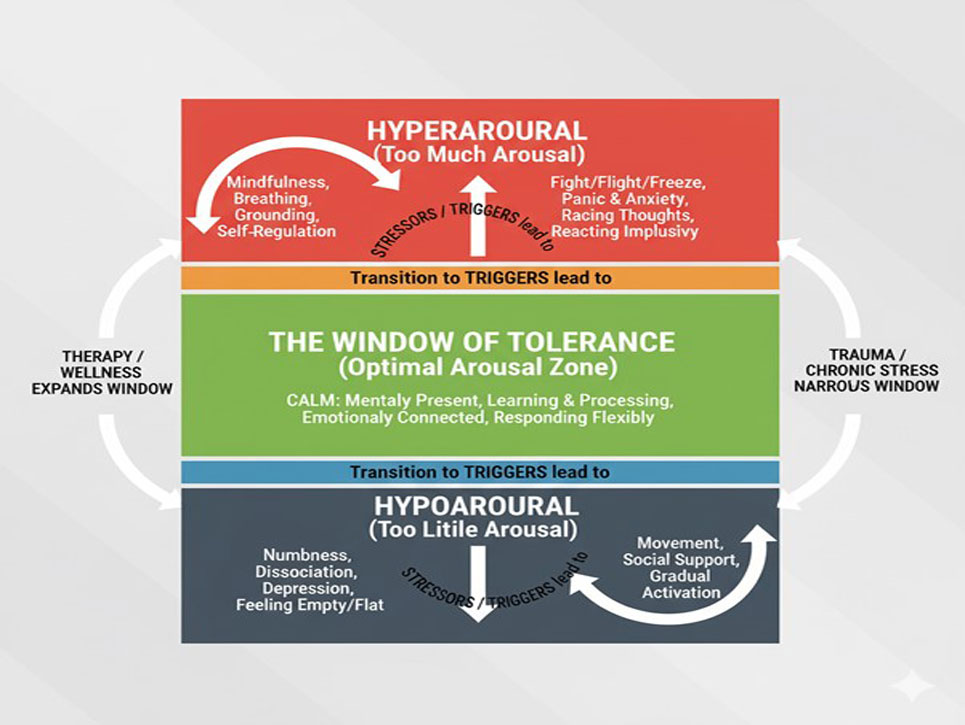
In ADHD therapy, practices like yoga or slow movement are sometimes used not just as exercise but as nervous system regulation tools. Many adults with ADHD experience their nervous system as either “under-stimulated” (restless, bored, searching for stimulation) or “over-activated” (overwhelmed, emotionally reactive). Gentle movement can help shift the body back toward a more regulated state where attention and decision-making become easier.
Team sports and competitive activities: Team sports provide the additional benefit of novelty and social co-regulation, both of which are particularly powerful for the ADHD dopamine system. The unpredictability of a live opponent or teammates produces the stimulation that a solo gym routine eventually loses.
The Transition Problem
The most frequently cited barrier to exercise among adults with ADHD is not the exercise itself, it is the transition into it. A useful way to think about this is that the ADHD brain struggles most with starting the engine, not with driving the car. Once movement has begun, many people find the activity itself relatively manageable, sometimes even enjoyable.
Getting into workout clothes. Leaving the house. The threshold between "not exercising" and "exercising" is where the executive dysfunction concentrates. Strategies that reduce this threshold, laying out gym clothes the night before, scheduling exercise at a fixed time immediately following an existing anchor activity, using body doubling through group classes, address the real barrier rather than the exercise itself. In ADHD coaching and therapy, much of the focus is often on lowering these activation barriers, making the first step so small and automatic that the brain does not have to negotiate with itself every time.
At Coach For Mind, we regularly see clients for whom exercise functions as a primary regulation tool. When it lapses, due to illness, travel, or seasonal change, the corresponding deterioration in executive function and emotional regulation is clinically observable within days. It is not optional maintenance. For many adults with ADHD, it functions less like optional wellness and more like core nervous system maintenance. To know more about ADHD-informed therapy at Coach For Mind, click here.
The Subtype Consideration
Different ADHD presentations may respond slightly differently to movement patterns, although individual preference and enjoyment remain the most reliable predictors of consistency.
Hyperactive/Combined subtype: High-intensity, physically demanding exercise that provides an outlet for motoric restlessness like running, boxing, team sports, HIIT, tends to be most effective. The body needs to discharge the activation the nervous system is generating.
Inattentive subtype: Movement that incorporates attentional demand alongside physical effort like martial arts, yoga, climbing, dance, tends to produce the greatest cognitive benefit. Activities that require tracking multiple variables simultaneously provide a natural, externally structured training environment for the attention system.
Part Three: Nutrition: The Gut-Brain Connection
What the Evidence Actually Says
Nutrition and ADHD has been one of the most contentious and, frankly, most misrepresented areas of lifestyle literature. On one side, overclaiming: the suggestion that dietary changes can replace medication, or that a specific supplement will resolve executive dysfunction. On the other, underclaiming: the dismissal of dietary influence as irrelevant to a "brain-based" condition.
The research sits in a more nuanced and useful place. In therapy, we often see that eating patterns in ADHD are shaped as much by executive function as by nutrition knowledge. Many adults already know what they “should” be eating, but struggle with planning meals, remembering to eat, or managing energy crashes that lead to impulsive food choices. Understanding the neurological patterns behind these behaviours is often the first step toward building eating habits that actually work for the ADHD brain.
The Mediterranean and DASH Advantage
Research consistently demonstrates that Mediterranean and DASH dietary patterns are inversely associated with ADHD risk and symptom severity. These patterns share key features: high intake of oily fish (omega-3 fatty acids), vegetables, fruits, legumes, nuts, and whole grains; moderate intake of lean protein; and low intake of processed food, refined sugar, and additives.
The mechanism is increasingly understood through the microbiota-gut-brain axis, the bidirectional communication pathway between the gut microbiome and the central nervous system. One way researchers describe this is that the gut and brain function almost like two ends of the same communication network, signals from digestion, inflammation, and microbial activity continuously influence mood, energy, and cognitive regulation.
The gut produces approximately 90% of the body's serotonin and significant quantities of other neurotransmitters and their precursors. A gut microbiome shaped by a Western dietary pattern, high in ultra-processed food, low in fibre diversity, produces a neurochemical environment that is less supportive of prefrontal cortex function. A microbiome shaped by a Mediterranean or DASH pattern does the opposite.
A Western or "junk food" dietary pattern has been associated with increases in ADHD risk of up to 92% in some studies. This is not a marginal finding. It is a clinically significant number that deserves to be taken seriously.
In practice, many of these principles translate easily into Indian dietary patterns as well, meals built around vegetables, lentils, whole grains, healthy fats, and moderate protein sources often resemble Mediterranean-style nutrition more closely than highly processed convenience foods do. The challenge for many ADHD adults is less about what to eat and more about remembering to eat regularly and avoiding long gaps that lead to energy crashes.
The Few-Foods Elimination Approach
For a significant subset of individuals, approximately 60% of children in well-designed trials, with adult data less extensive but directionally consistent, ADHD symptoms have a food sensitivity component. The "few-foods" or oligoantigenic diet, which strips the diet to a small set of hypoallergenic foods and systematically reintroduces potential triggers, has produced substantially improved behaviour in this responder group.
This is not a diet to attempt without professional guidance. It is demanding to implement, carries nutritional risk if poorly supervised, and works for a specific subgroup rather than universally. But it speaks to an important principle: for some people, what you are eating is directly generating or amplifying the neurological symptoms attributed to ADHD. Identifying those specific foods, under clinical supervision, can be genuinely transformative.
For adults exploring dietary sensitivities, this process often works best alongside professional support. Nutrition changes can intersect with emotional eating patterns, executive function challenges, and long-standing habits around food. A collaborative approach, involving medical professionals, nutritionists, and therapists, tends to produce more sustainable results than restrictive diets attempted in isolation.
"The 'vicious cycle' of forgetting to eat all day and then binge-eating at night." This pattern is extremely common in ADHD. The same executive function differences that affect time management can also disrupt hunger awareness, meal planning, and grocery routines.
Practical Nutritional Principles for ADHD
Protein first: High-protein meals stabilise blood sugar and provide the amino acid precursors for dopamine and norepinephrine synthesis. Skipping breakfast or eating a very high-carbohydrate, low-protein breakfast can create blood sugar fluctuations that worsen attention and energy stability through the morning.
Omega-3 fatty acids: The evidence for omega-3 supplementation, particularly EPA-rich fish oil - is among the strongest in the individual supplement literature, with consistent findings of modest but reliable improvements in attention and hyperactivity. Oily fish two to three times weekly, or a high-quality EPA-dominant supplement, is a reasonable, well-evidenced addition to a Mediterranean-pattern diet.
Hydration: Research found that children with ADHD were significantly less likely to drink adequate water daily, and that hydration is part of the composite lifestyle index associated with better outcomes. The executive dysfunction of ADHD makes regular, proactive hydration easy to forget. Externalising this, a large, visible water bottle on the desk; a phone reminder; the water placed where it will be seen, is the kind of environmental design that compensates for working memory failure.
Part Four: Sleep: The Non-Negotiable Foundation
Why ADHD and Sleep Are Inseparable
Sleep and ADHD have a bidirectional, mutually compounding relationship that is poorly appreciated in most lifestyle discussions. ADHD disrupts sleep. Disrupted sleep worsens ADHD. The cycle, left unaddressed, progressively degrades every other dimension of the condition.
In therapy sessions, sleep often appears as one of the most overlooked drivers of ADHD difficulty. A client may describe struggling with focus, motivation, or emotional regulation, only to realise that their sleep schedule has quietly drifted later and later over the past few weeks. When sleep stabilises, many other symptoms become noticeably easier to manage. The specific mechanisms of ADHD-related sleep disruption are neurological:
The Default Mode Network (DMN), the brain's resting-state activity, remains unusually active in the ADHD brain as sleep approaches. The internal monologue continues. Many adults with ADHD describe it as feeling like the brain’s “background radio” never switches off, ideas, memories, and plans keep broadcasting long after the body is ready to rest. This is not anxiety in the clinical sense, though it can coexist with it. It is the ADHD brain's characteristic difficulty with self-regulation extending into the transition to sleep.
Circadian rhythm phase delay is also common in ADHD: the sleep-wake cycle runs later than average, making conventional morning schedules physiologically challenging in a way that goes beyond ordinary reluctance.
Sleep deprivation then worsens executive function, working memory, emotional regulation, and impulse control, every domain already impaired by ADHD, creating a compounding deficit that can be indistinguishable from a clinical worsening of the condition itself.
Sleep Hygiene Adapted for the ADHD Brain
Standard sleep hygiene advice — maintain a consistent schedule, avoid screens, don't drink caffeine after noon — is directionally correct but often practically inadequate for ADHD without adaptation.
Anchor the sleep schedule to wake time, not bedtime: For a brain that struggles to initiate transitions, attempting to force sleep at a fixed time is often a losing battle. Anchoring to a consistent, non-negotiable wake time — and using morning light exposure to advance the circadian phase — is more reliable than attempting to control sleep onset directly.
Pre-sleep rituals as executive scaffolding: The transition from waking activity to sleep preparation is a task initiation challenge. A consistent, low-demand sequence of activities — the same sequence, in the same order, every night — reduces the executive load of this transition and gradually becomes an automatic neurological trigger for the sleep state. The ritual does the initiating when executive function cannot.
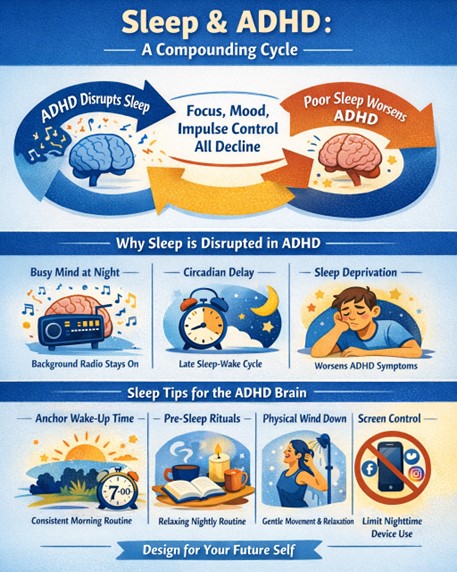
The DMN problem — physical rather than cognitive discharge: Attempting to quiet the DMN through cognitive effort (telling yourself to "stop thinking") is ineffective for most ADHD brains. Physical approaches like gentle movement, a warm shower or bath before bed, progressive muscle relaxation, engage the body rather than demanding the mind cooperate with something it is neurologically unable to produce on demand.
This is one reason many ADHD-informed therapists incorporate body-based regulation strategies into sleep routines. When the nervous system begins to settle physically, through breathing exercises, gentle movement, or sensory calming, the mind often follows more naturally.
Screen management is structural, not willpower-based: The ADHD brain's novelty-seeking system finds the infinite scroll of social media almost irresistible, particularly in the evening when executive inhibition is depleted. Managing this requires environmental design, charging devices outside the bedroom, using app timers that require deliberate effort to override, or substituting a genuinely engaging audio alternative (podcast, audiobook) that satisfies the novelty drive with lower neurological cost. In ADHD coaching, this is often framed as designing the environment for your future self, rather than relying on late-night willpower.
Part Five: The Dopamine-First Approach to Habit Building
Why Standard Habit Advice Fails the ADHD Brain
Most habit formation advice is built on a premise that does not fully hold for ADHD: the idea that repeating a behaviour consistently for enough days will eventually turn it into an automatic routine that requires little effort. For many neurotypical brains, this is broadly accurate. For ADHD brains, the premise breaks down because of what we can call the novelty decay problem.
The ADHD brain’s dopaminergic response to a new behaviour naturally habituates over time. Novelty itself is one of the strongest drivers of motivation and engagement. When a habit is new, a fresh planner, a new workout routine, a productivity app, the brain receives a surge of stimulation that helps bypass executive friction.
The habit does not necessarily become automatic. Instead, it often becomes effortful again. And effort, when it is not accompanied by sufficient stimulation or reward — is precisely where the ADHD brain tends to struggle.
This is why the ADHD lifestyle management cycle can feel so predictable and discouraging. A new system begins with enthusiasm and momentum. Over time the novelty fades, consistency drops, and the system collapses. Many adults interpret this pattern as a personal failure of discipline or motivation.
From a neurological perspective, however, the dopamine system is behaving exactly as it was designed to behave.
In therapy, we often hear clients describe this cycle with a mix of frustration and relief once they recognise it. One client put it simply: “Every time I think I’ve finally fixed my routine, it works for a few weeks and then my brain just… stops caring.” Understanding the role of dopamine in habit formation often shifts the narrative from “Why can’t I stick to anything?” to a more accurate question: “How do I design systems my brain can actually sustain?”
The Dopamine-First Redesign
If the challenge is not discipline but dopamine, the solution is not to demand more willpower from the system. Instead, the goal is to design stimulation back into the behaviour intentionally and to expect that this design will need to evolve over time.
Rather than forcing the ADHD brain to operate like a neurotypical one, effective systems work with the brain’s motivational architecture.
Habit stacking with high-dopamine activities
One practical strategy is pairing low-stimulation tasks with experiences that naturally provide engagement or enjoyment. A household chore becomes easier when it is paired with a favourite playlist. Administrative work becomes more tolerable when it is done in an environment that provides stimulation, a coffee shop, background music, or a podcast.
In these situations, the dopamine signal comes not from the task itself but from the surrounding experience. The cleaning gets done because the playlist is playing. The report gets written because the environment makes it easier to stay engaged.
This is not “cheating” or avoiding discipline. It is a neurologically appropriate design.
The Dopamine Menu
Another useful framework is thinking about dopamine sources in three broad categories.
- Mains - Activities that provide sustainable dopamine with long-term benefits. Examples include exercise, meaningful work, creative projects, learning, or deep social connection.
- Sides - Shorter activities that provide moderate stimulation without consuming the day. Examples might include a walk, a short game, listening to music, or a brief conversation with a friend.
- Desserts - High-stimulation, low-effort activities that are genuinely enjoyable but easy to overconsume. Social media, gaming, and passive entertainment typically fall into this category.
The goal is not to eliminate desserts entirely. For many people, these activities are part of rest and enjoyment. The goal is simply to structure the day so that mains and sides happen before desserts, rather than being displaced by them.
Strategy rotation: Planned Novelty
Given that the ADHD brain will habituate to any system over time, building in planned rotation, changing the physical environment where work happens, rotating the planner format, refreshing the exercise type every few months, preserves the novelty signal without abandoning the underlying behaviour. The habit remains consistent. The method rotates. This is not an inconsistency. It is maintenance.
Part Six: Environment Design - The Brain Outside Your Head
The Principle of the Externalised Brain
The ADHD brain carries a working memory deficit: the internal cognitive desk is smaller, things fall off it more easily, and relying on internal memory for planning and task management is a system perpetually on the verge of collapse. The single most practical response to this is externalisation, moving as much cognitive load as possible out of the brain and into the physical and digital environment.
This is the principle behind every effective ADHD organisational system, regardless of the specific tool used.
The Point of Performance Rule
Tools and objects only work if they are located at the precise point where the relevant task or decision occurs. A bin for junk mail works only if it is placed exactly where mail is opened. A medication reminder works only if it is attached to the action that already happens reliably at that time. A gym bag motivates exercise only if it is already by the door when the relevant moment arrives.
This sounds trivially obvious, but it represents a fundamental departure from the standard organisational principle of "everything in its place." For the ADHD brain, "out of sight" is genuinely, neurologically "out of mind." The strategic use of visible, accessible placement — what organising specialists call functional clutter — is not a failure of neatness. It is an effective working memory compensation.
The Sensory Environment Audit
Environmental sensory load is a significant and frequently overlooked ADHD management lever. The ADHD brain's compromised sensory gating — the filtering mechanism that allows irrelevant stimuli to be suppressed — means that environmental complexity consumes cognitive bandwidth that is already in short supply.
A sensory environment audit considers:
Noise: Open-plan offices and unpredictably noisy environments are among the most functionally impairing contexts for many adults with ADHD. Noise-cancelling headphones are not a luxury. For many, they are the single practical intervention that makes sustained cognitive work possible in a shared environment. Brown and white noise, or specifically structured focus music, can provide a consistent auditory environment that reduces the attentional disruption of unpredictable ambient noise.
Visual complexity: A visually chaotic environment continuously bids for attentional resources. For the ADHD brain, every visible object that could be relevant competes for attention. The working environment benefits from meaningful visual simplicity — not the minimalist "everything hidden" approach (which triggers out-of-sight, out-of-mind forgetting), but deliberate visual management: important items visible and accessible, irrelevant items removed from the primary visual field.
Lighting: Harsh overhead fluorescent lighting generates sensory overload for many ADHD adults; warmer, lower, and more controllable lighting environments reduce this load.
Transition management: Many adults with ADHD identify transitions, the shift from one activity or environment to another, as among the most executively demanding moments of the day. Building explicit transition rituals, using timers to create a "warning period" before a transition is required, and reducing the number of transitions in a given day are practical strategies that reduce this executive load.
Part Seven: Social Support - The Most Underrated ADHD Intervention
The Research That Changes the Framing
Of all the findings in the recent ADHD lifestyle literature, perhaps the most clinically significant and least emphasised is this: research with 64 adults across a wide age range found that social support predicted better daily functioning independently of ADHD symptom severity.
This is a remarkable finding. It means that tangible help from others, a sense of belonging, and having people who actively reinforce self-worth improved functioning — not by reducing the underlying symptoms, but by providing an external framework within which the symptoms became more manageable. The environment was doing what the executive system could not reliably do alone.
The implications are direct. Social connection for ADHD is not merely a quality-of-life consideration. It is a functional intervention. The person who has a partner, friend, or colleague who helps them structure a challenging task, provides a "body double" for difficult work, or simply offers consistent, unconditional positive regard is operating with a structural advantage that partially compensates for executive dysfunction.
Body Doubling — Social Co-Regulation as a Clinical Tool
Body doubling is a well-documented phenomenon in which the physical presence of another person dramatically improves task initiation and sustained effort in people with ADHD. It is one of the most robust and accessible non-pharmacological interventions available. It does not require the other person to be actively helping. The regulated presence of another nervous system appears to directly co-regulate the ADHD nervous system, providing an external anchor for the attention and effort that internal regulation cannot reliably sustain.
Body doubling works in person, a study partner, a shared workspace, a coworking environment, a family member in the same room and, increasingly, virtually. Online body doubling communities and focus co-working sessions have made this tool accessible regardless of circumstance.
Understanding why body doubling works, as a neurological, co-regulatory phenomenon rather than a quirky preference, transforms it from something people feel mildly embarrassed about relying on into something they can pursue deliberately and without shame.
Building the Right Support Network
Research distinguishes between different types of social support and their relative impact:
- Tangible support — practical help: someone who will sit with you while you do the task you cannot start, help you organise the physical space that has become overwhelming, or provide reminders for the appointments that are falling through the cracks. This is the most directly functional form of support for ADHD.
Belonging and community — the experience of being genuinely understood by others who share similar neurological experience. ADHD communities, online and in person, provide this in a form that is difficult for neurotypical relationships to replicate: the normalisation of experiences that the broader world frequently pathologises or dismisses.
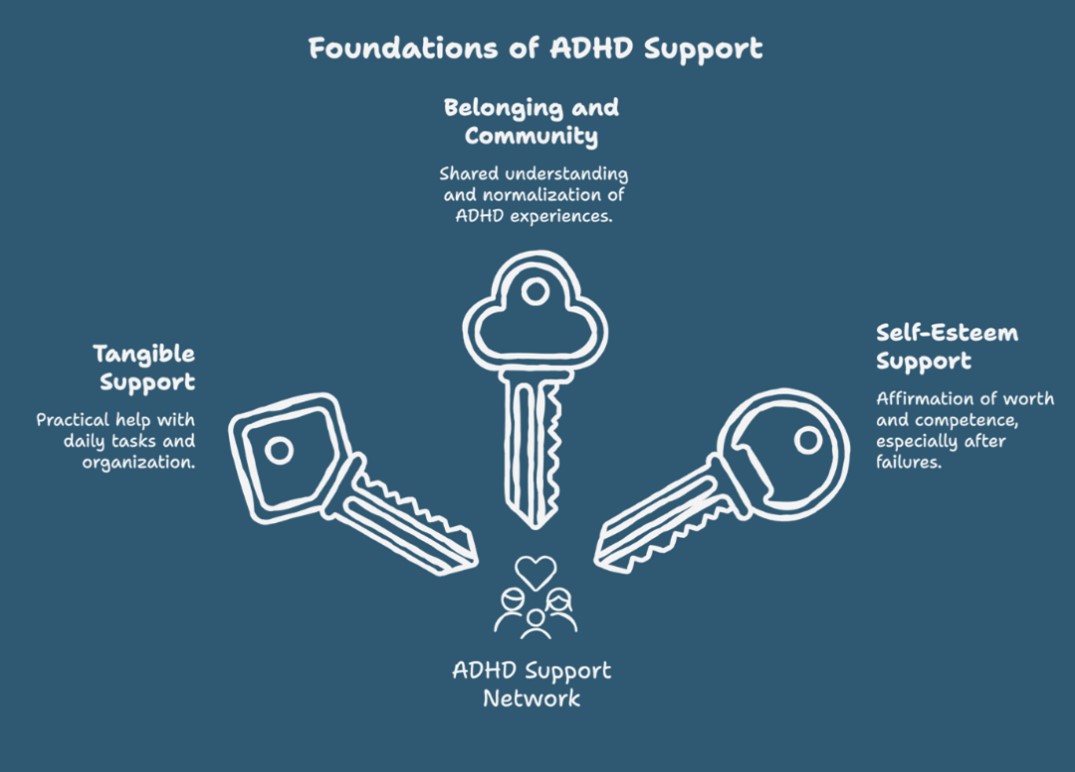
- Self-esteem support — people who consistently affirm the person's worth, competence, and value, particularly in the wake of the failures, frustrations, and ADHD Tax events that erode self-concept over time. Given the prevalence of Rejection Sensitive Dysphoria in ADHD, the presence of reliably non-critical, genuinely supportive relationships is not merely pleasant. It is protective.
At Coach For Mind, psychoeducation for both the individual and their closest relationships is a foundational part of our ADHD support work. When a partner, family member, or close colleague understands what is neurologically happening, the dynamic shifts from confusion and frustration to something that can be genuinely collaborative. That shift changes everything. You can book your free call by clicking here.
Part Eight: Leveraging ADHD Strengths — The Other Half of the Picture
What the Research Found
Much of the conversation around ADHD focuses on difficulties, attention problems, impulsivity, time blindness, and executive dysfunction. But research increasingly shows that ADHD also comes with identifiable strengths.
One study comparing 200 adults with ADHD to 200 neurotypical adults found that people with ADHD reported significantly higher levels of strengths such as hyperfocus, creativity, humour, spontaneity, intuition, courage, and enthusiasm.
Importantly, the research found that both recognising these strengths and actively using them in daily life predicted better wellbeing and life outcomes, regardless of symptom severity.
In other words, a life designed only around managing deficits is incomplete. People tend to function best when they are both supporting their challenges and actively using their natural cognitive advantages.
Building a Strengths-Informed Life
Hyperfocus can be a powerful asset in the right environment. While ADHD attention may struggle with low-interest tasks, it can sustain extraordinary focus on topics that genuinely engage curiosity or passion. Identifying the types of work that reliably trigger this focus — and structuring time around them, can be far more effective than trying to perform evenly across all task types. Read more about Adult ADHD here.
Creativity and divergent thinking are also frequently reported strengths. The ADHD brain often makes connections across ideas quickly, which can support problem-solving, innovation, and creative work.
Spontaneity and adaptability can be advantages in environments that value flexibility, responsiveness, and fast thinking rather than rigid routine.
And humour, often noted in ADHD research, can serve as both a social connector and a powerful coping resource.
The goal is not to eliminate ADHD traits. The more useful question is often: “How can I design a life where the way my brain works becomes an advantage more often than a liability?”
Part Nine: Managing the Medication Gap
The Hours That Standard Advice Ignores
For adults who use stimulant medication, there is a specific and largely unaddressed lifestyle challenge: the hours when medication is not active. The medication crash — the period in late afternoon or evening when stimulants wear off — frequently produces a distinctive combination of fatigue, emotional volatility, cognitive fog, and an increased pull toward high-dopamine, low-effort stimulation (the phone, the snacks, the passive entertainment spiral).
This is a predictable neurological event, not a personal failing. And it responds to deliberate environmental and behavioural design.
Lower demands during lower-regulation hours: Scheduling demanding cognitive tasks and high-stakes social interactions during medication-active periods, and protecting medication-off periods for lower-demand activities, is not avoidance. It is intelligent resource allocation — the same principle any professional applies when scheduling work around their known energy patterns.
Pre-crash nutritional support: A protein-rich snack in the mid-afternoon — before the medication effect diminishes — can stabilise blood sugar through the transition and reduce the intensity of the crash.
Sensory support in the evening: Many adults with ADHD find the medication-off period characterised by increased sensory sensitivity. Reducing environmental sensory load during these hours — quieter environments, lower lighting, familiar and predictable stimuli — reduces the regulation burden on a depleted executive system.
Non-screen evening activities that provide dopamine: The evening dopamine gap increases the pull toward high-stimulation screen use, which then disrupts sleep. Identifying genuinely engaging, non-screen evening activities that provide moderate dopamine — a specific hobby, physical movement, creative work, social connection — and making them accessible and low-friction is the most effective strategy for this period.
Part Ten: The Sustainable ADHD Lifestyle — Putting It Together
The 'Try Different, Not Harder' Principle
If there is a single reorientation that distinguishes an ADHD-informed lifestyle from a neurotypical one applied badly to the ADHD brain, it is this: the problem is never effort. The problem is always architecture.
The person who has "tried everything" and concluded that they are simply incapable of maintaining habits has usually tried neurotypical systems that were not designed for their neurology, repeated them with increasing desperation and decreasing novelty, experienced the predictable failure when the dopamine signal habituated, and drawn the wrong conclusion about what the failure means.
The architecture needed is different — not more effortful.
Start with three, not thirty: The research finding that ADHD children with healthier lifestyle indices improved outcomes across multiple domains simultaneously reflects the compound nature of lifestyle factors. But beginning with thirty changes produces overwhelm, not momentum. Three well-chosen, low-friction changes — morning protein, daily movement, and a fixed sleep wake time — compound over months into a meaningfully different neurological baseline.
Design for the worst day, not the best: The most common mistake in ADHD habit design is building systems that work when motivation and executive function are at their peak. The system that works on a good day fails on the first hard day. Sustainable ADHD lifestyle design builds systems that work on the worst day: the simplest possible version, with the lowest possible executive demand, and the highest possible environmental support.
Celebrate completion, not perfection: The ADHD nervous system is sensitive to shame and catastrophically responsive to the belief that a single failure has invalidated an entire effort. A habit that was maintained five out of seven days this week is not a failure. It is a five-out-of-seven habit — one that has been running at 71% and can be maintained, adjusted, or rebuilt from exactly where it stopped. Progress is non-linear. Setbacks are neurologically expected. Returning to the system after a lapse is the skill that matters most.
Conclusion: A Life Designed for the Brain You Actually Have
Living with ADHD in a world designed for neurotypical executive function is a specific and sustained challenge. The systems that surround you — professional structures, educational architectures, social norms around time and reliability and self-management — were built around neurological assumptions that do not apply to you. The conclusion that the mismatch is your failure is one of the most common and most unjust consequences of unrecognised or unsupported ADHD.
The research is clear: with the right architecture — the right combination of physical movement, nutritional foundation, sleep structure, environmental design, social support, and genuine engagement with your own neurological strengths — adults with ADHD can and do thrive. Not despite their neurology, but through a life deliberately designed to work with it.
This is not about becoming someone else, or performing a neurotypical version of yourself that you can never quite sustain. It is about building the external structures that compensate for genuine internal impairments, identifying the contexts and conditions in which your brain's characteristics are assets, and approaching the inevitable non-linear nature of this work with the self-compassion it deserves.
The goal is not perfection. It is a life that fits your brain — today, imperfectly, and increasingly well over time.
Take the Next Step: ADHD Support at Coach For Mind
If this article has described experiences you recognise — the task paralysis, the novelty decay, the exhaustion of performing consistency in a system not built for your brain, or simply the long, quiet question of whether things could be different — the next step is finding out what is actually happening and what can actually be done.
At Coach For Mind, our work with ADHD encompasses the full clinical picture:
Comprehensive ADHD assessment — using the DIVA-5 structured diagnostic interview with emotional amendment, conducted by our RCI-registered clinical psychologists. Assessment goes beyond symptom confirmation to map the full functional profile: executive impairments, emotional regulation, strengths, and the compensatory strategies that may have been concealing the diagnosis for years.
Somatic and trauma-informed therapy — recognising that many adults with ADHD carry a trauma-like burden from decades of misunderstanding, and that emotional dysregulation and RSD require body-based, nervous-system-informed approaches alongside executive function work.
Executive function coaching — practical, personalised support for building the external scaffolding — routines, environmental design, planning tools, and transitional systems — that compensates for genuine internal impairments without demanding neurotypical performance.
Psychoeducation for individuals and families — because ADHD does not exist in isolation from the relationships that surround it, and because the relational dynamic changes fundamentally when both partners understand what is neurologically happening.
Sessions are available online and in-person in Gurgaon. Whether you are exploring ADHD for the first time, seeking assessment, or looking for therapeutic support after a diagnosis, we are equipped to meet you where you are.
Begin with a free 15-minute discovery call. Visit www.coachformind.com or contact us at coachformind@gmail.com.
Online and in-person sessions available. RCI-registered clinical psychologists. Evidence-based, somatic, and ADHD-informed.
References and Research Basis
This article draws on a synthesis of peer-reviewed research and clinical literature, including:
- Holton & Nigg (2020). The association of lifestyle factors and ADHD in children. Journal of Attention Disorders.
- Lange et al. (2023). Nutrition in the management of ADHD: A review of recent research. Current Nutrition Reports.
- Pinto et al. (2022). Eating patterns and dietary interventions in ADHD: A narrative review. Nutrients.
- Atique et al. (2025). Distracted, hyperactive, and thriving: Factors supporting everyday functioning in adults with ADHD. BMC Psychiatry.
- Hargitai et al. (2025). The role of psychological strengths in positive life outcomes in adults with ADHD. Psychological Medicine.
- Barkley, R.A. Taking Charge of Adult ADHD. Guilford Press, 2010.
- Brown, T.E. A New Understanding of ADHD in Children and Adults. Routledge, 2013.
Written by Mr Lekh Bajaj - Founder and Clinical Psychologist at Coach For Mind
Our RCI-registered psychologists specialise in ADHD assessment and treatment, somatic and trauma-informed therapy, and evidence-based executive function support. Online and in-person sessions available in Gurgaon. http://www.coachformind.com
Frequently Asked Questions
It’s understandable to want to explore non-medication options first. Many adults prefer to start with changes that feel more natural or within their control. Research shows that lifestyle factors like exercise, sleep, nutrition, and structure can significantly support ADHD management. For some people they are enough to reduce symptoms meaningfully, while for others they work best alongside medical treatment. Lifestyle changes often strengthen the effectiveness of any other intervention.
At Coach For Mind, we help clients build realistic systems that support ADHD functioning through ADHD-informed therapy, behavioural strategies, nervous system regulation work, and structured habit design, so the changes are sustainable rather than overwhelming.
It’s very common to wonder if food might be affecting focus, energy, or emotional stability. Research consistently points toward dietary patterns similar to the Mediterranean or DASH style diet, rich in vegetables, fruits, whole grains, legumes, and healthy fats, while limiting ultra-processed foods and excess sugar. These patterns support brain health partly through their effect on the gut microbiome and neurotransmitter balance.
At Coach For Mind, we explore nutrition as one part of a broader ADHD support system. Therapy may include behavioural habit work, psychoeducation about brain functioning, and regulation practices, helping clients build eating patterns that support both energy and emotional regulation.
Many adults with ADHD notice they think more clearly after movement. That experience is very real. Vigorous exercise increases dopamine and norepinephrine in the brain, neurochemicals involved in attention, motivation, and impulse control. Even a single session can improve focus for an hour or more, and consistent movement supports long-term brain regulation.
In therapy at Coach For Mind, we often integrate behavioural activation, routine building, and nervous system regulation approaches so that movement becomes a supportive part of daily life rather than another difficult habit to maintain.
This is a very common frustration for people with ADHD, and it can feel discouraging when something that worked suddenly stops. ADHD motivation systems are strongly driven by novelty and stimulation. When a routine becomes familiar, the dopamine response that made it engaging may naturally decline. This doesn't mean you lack discipline — it reflects how the ADHD brain regulates motivation. At Coach For Mind, we work on ADHD-specific habit design, including planned novelty, environmental structuring, and flexible systems so routines can adapt over time rather than collapse when motivation changes.
If you find it easier to focus when someone else is around, you're not alone. Body doubling means working in the presence of another person, physically or virtually, to support focus and task initiation. Research and clinical experience show it can be highly effective because the presence of another regulated person helps anchor attention and reduce avoidance. At Coach For Mind, we help clients identify practical strategies like body doubling while also addressing deeper patterns through ADHD coaching tools, nervous system regulation work, and therapy focused on executive functioning challenges.
Many adults with ADHD have tried countless systems and felt frustrated when they didn't last. The key principle is designing routines around the brain's reality, not ideal expectations. That means reducing friction, anchoring habits to existing behaviours, simplifying starting steps, and allowing flexibility when energy fluctuates. In therapy at Coach For Mind, we help clients create personalised ADHD systems using behavioural strategies, cognitive approaches, and practical environmental design, so routines support real life rather than becoming another source of pressure.
If emotions feel intense or difficult to regulate, that experience is very common for adults with ADHD. Lifestyle factors like exercise, sleep, nutrition, and supportive relationships can reduce overall nervous system reactivity and improve emotional regulation. However, emotional dysregulation and rejection sensitivity often also involve deeper nervous system patterns. At Coach For Mind, therapy may include trauma-informed approaches, somatic regulation techniques, and ADHD-focused psychotherapy to help clients understand and regulate emotional responses more effectively.
Feeling understood and supported can make a huge difference when living with ADHD. Research shows that strong social support improves daily functioning independently of symptom severity. Supportive relationships can help compensate for executive functioning challenges and reduce shame or isolation that often accompanies ADHD. At Coach For Mind, therapy provides a structured and supportive environment where clients can build self-understanding, emotional regulation skills, and healthier relational patterns alongside practical ADHD management strategies.
Many adults start wondering about ADHD after years of feeling overwhelmed, inconsistent, or stuck despite trying hard. ADHD often affects attention, emotional regulation, motivation, and self-organisation in ways that can impact work, relationships, and self-confidence. A professional assessment or therapy process can help clarify what's happening and what support might help. At Coach For Mind, we work with adults through ADHD-informed therapy, psychoeducation, and structured behavioural strategies, helping clients understand their patterns and build systems that support how their brain actually works.
It's common to assume ADHD support is only about medication, but many aspects of ADHD benefit from therapy. Medication can support attention and impulse regulation, but therapy addresses the behavioural patterns, emotional impact, and life systems affected by ADHD. This includes procrastination, overwhelm, self-criticism, and relationship difficulties. At Coach For Mind, we combine ADHD-focused therapy, behavioural interventions, somatic approaches, and practical skill building, helping clients develop both understanding and sustainable strategies.